
A break can become another decision to make. You close a document, pick up your phone and realize you have not chosen what you actually want to do. A short activity list gives you somewhere else to look.
That is the practical idea behind a dopamine menu: prepare a few options before you need them. You can use the list for breaks, enjoyable activities or things to try before returning to a task.
I built the dopamine menu builder as a free way to put those options together. You can also use paper or a plain note. Here is a flexible way to organize your own list.
What is a dopamine menu?
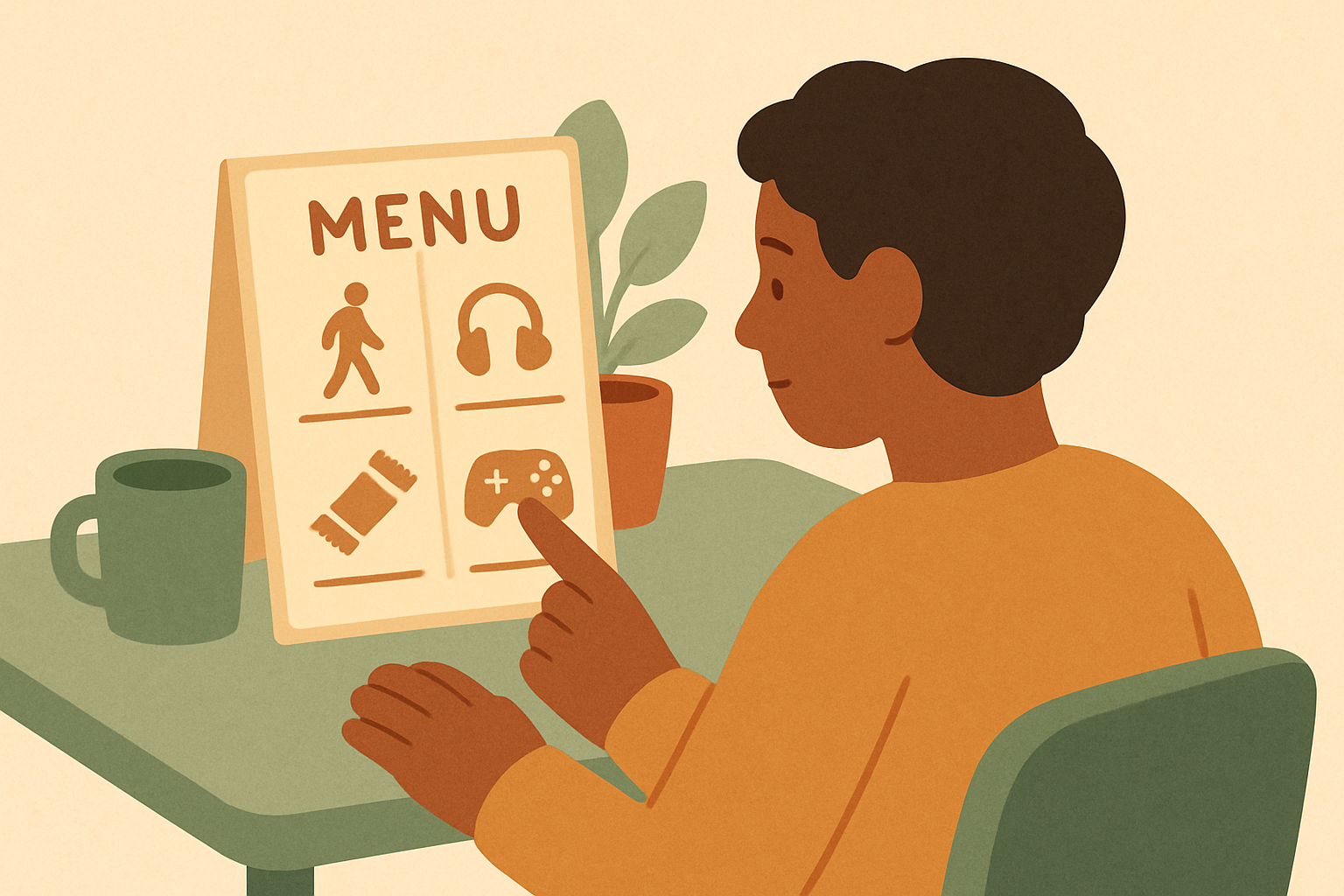
A dopamine menu is a prepared list of activities you enjoy or want to try, often arranged like a restaurant menu. The name does not mean the list measures, supplies or reliably increases dopamine. It is a planning tool, not a treatment for ADHD.
Jessica McCabe and Eric Tivers discussed a dopa-menu in the May 26, 2020 How to ADHD video. Tivers’ own media page lists that discussion.
What a prepared menu can help organize
A menu puts possible activities where you can see them. Instead of generating a new list each time, you can look at the choices you wrote down. You can then choose what fits the time, energy and resources you have.
If that difficulty is what brought you here, the ADHD task paralysis guide explains the informal term and suggests small steps to try.
Keep the first version short enough to scan. Three appealing options can be enough to try the format. You can add time estimates, note what each option needs, or remove entries you keep skipping.
If you want to write down thoughts or unfinished tasks before choosing a break, a brain dump is another option. You can try either approach on its own.
Use a menu as an optional planning aid. My guide to what everyday habits can and cannot do for ADHD separates practical routines from claims about raising dopamine. NIMH’s ADHD information explains the role of professional assessment and treatment.
An example menu with five sections
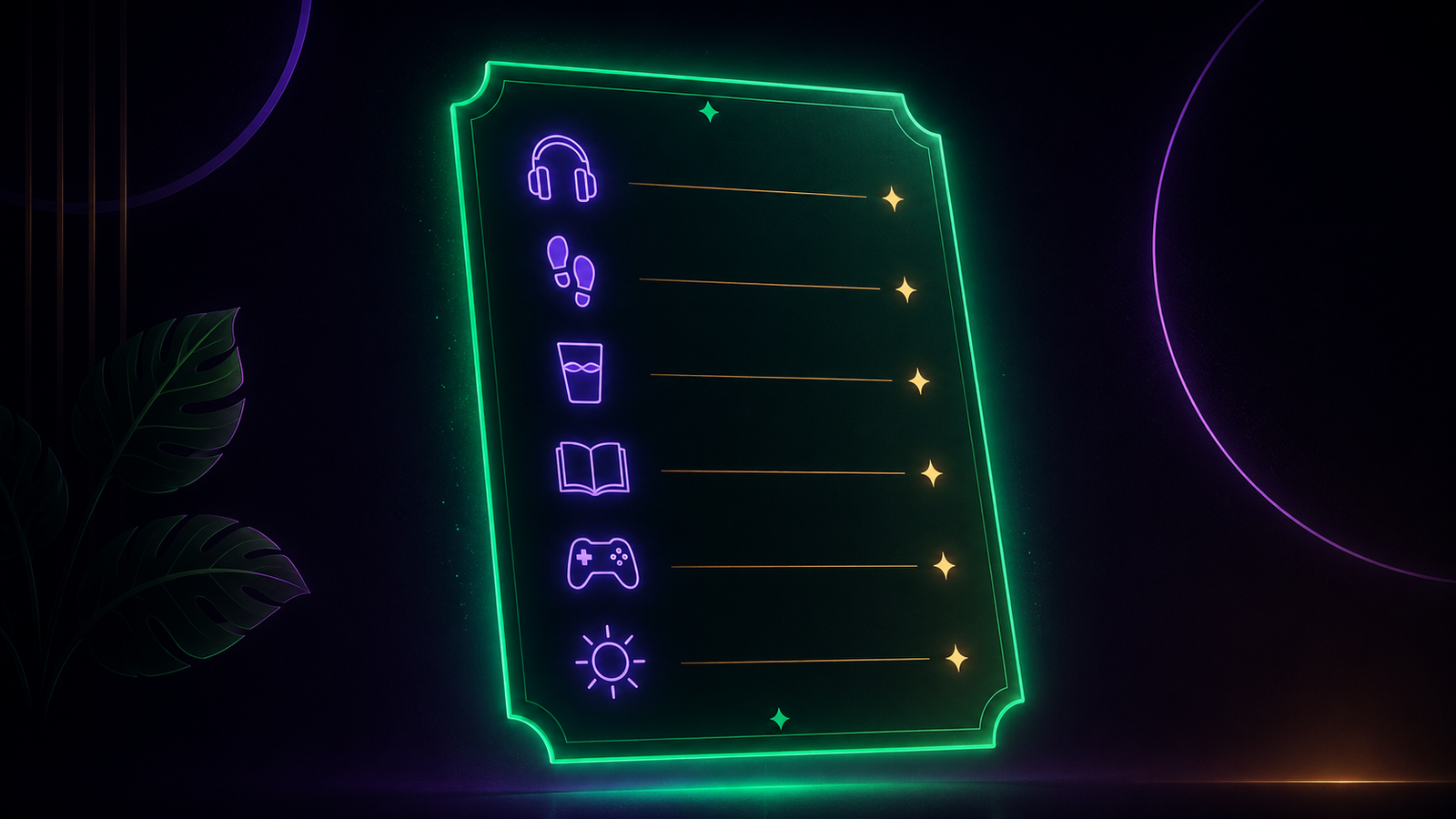
The restaurant format is one way to organize a list. Here are five possible sections and sample activities. Change the names, use fewer sections or skip the categories if a simple list suits you better.
- Starters: brief options, perhaps a minute or two. Get a glass of water, listen to a song, open a window or stretch if comfortable. Choose a duration that feels manageable for you.
- Mains: activities that need a longer break. You might take a short walk, tidy one part of a desk or play an instrument. Choose a duration that fits the time and energy you have.
- Sides: options that can accompany a task. Try quiet music or a drink within reach if those suit you. Leave out anything that makes concentrating harder.
- Desserts: longer leisure activities you want to make room for, such as gaming, watching a show or spending time on a hobby. Consider how much time you want to give them rather than assuming every break must lead straight back to work.
- Specials: occasional activities that need more planning, such as a day outdoors, a trip or time with friends. Include options that fit your access, budget and circumstances.
Separating a two-minute option from a two-hour activity can make the time commitment visible. The categories are a planning choice, not a rule about which activities are good or bad. You can include rest without treating it as something you have to earn.
How to make your own
Start with a few entries. You can expand or change the list after trying it.
- Write down activities you enjoy or would like to try. Include familiar, easy-to-arrange options as well as ones that take preparation.
- Consider the aftereffects. If an activity regularly leaves you feeling worse or takes more time than you want, change how you use it or choose something else.
- Group the options if that helps you scan them. Starters, mains, sides, desserts and specials are one possible structure, not a required set.
- Add rough time estimates and any practical needs. “Walk, about 20 minutes, shoes by the door” gives you more information to choose from than “walk” alone.
- Put the list somewhere accessible, such as a pinned note, a card on your desk or a page on the wall.
Pick one option when you want to try the menu. Afterwards, notice whether it suited the moment. Keep, change or remove it based on that experience.
A few rules that keep it useful
Review the list when your preferences, energy or circumstances change. Replace entries that no longer appeal to you. A plain list is fine, and so is a decorated one if you enjoy making it. The format should be easy for you to find and use.
The bigger point
I build software under softDev23, including Mana, Habitual and Catzy. The menu builder offers a simple way to keep activity ideas together.
If difficulties with daily tasks persist or interfere with your life, consider professional support. The NHS adult ADHD guidance explains support and assessment options.
For related tools and ideas, explore why standard habit trackers fail, the best gamified habit trackers guide and the best apps for ADHD guide. Use them to compare practical features around a specific need.
The dopamine menu ideas list offers more examples by section. Choose a few that appeal to you and add them to your list.
For preparing the start of a day, the ADHD morning routine guide offers another set of practical ideas.
Start with a short, visible list of activities you want to consider. Try an option when it fits, then use that experience to shape the next version.