
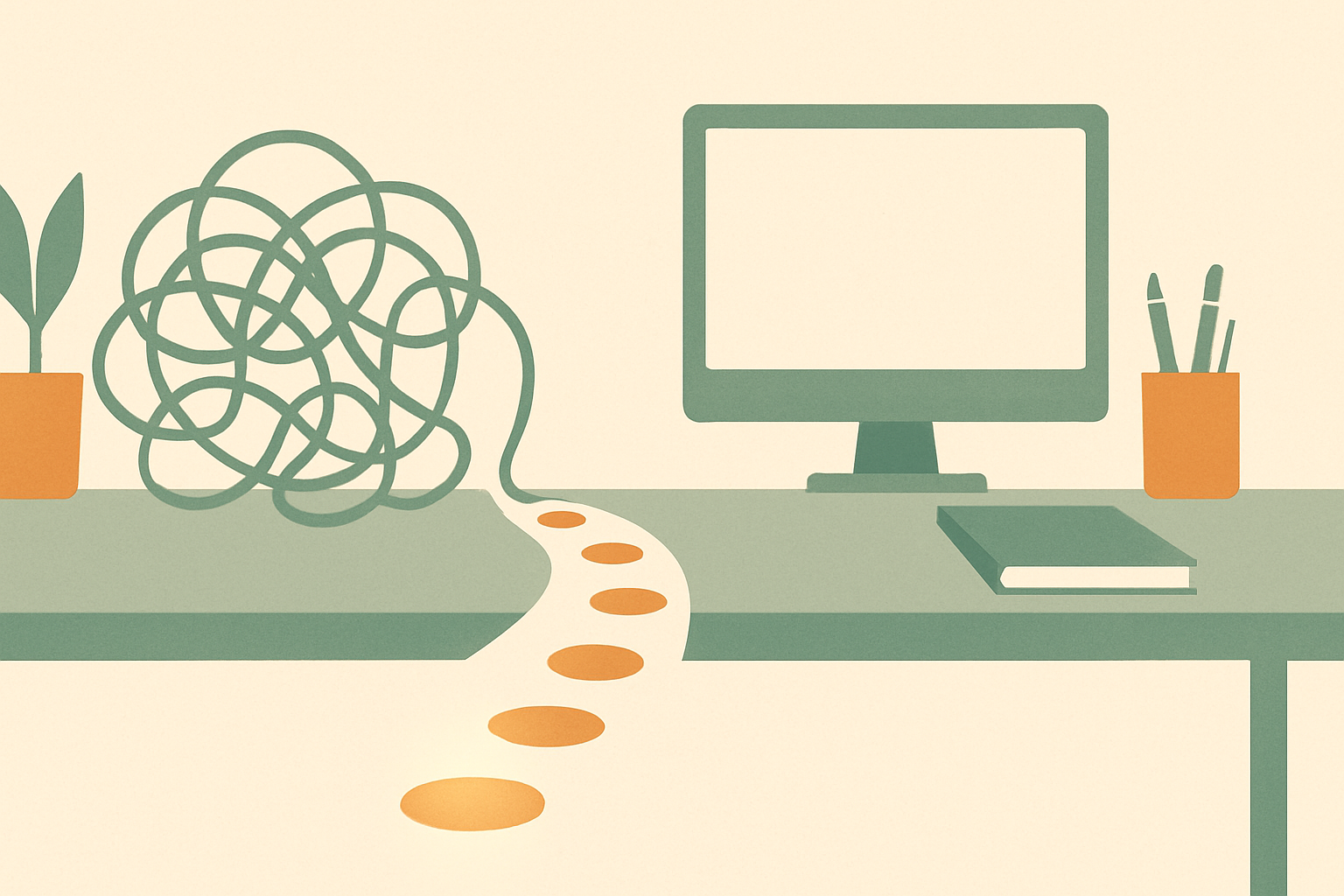

You know exactly what you need to do. You want to do it. It might even be urgent. And yet you sit there, unable to make yourself start, scrolling or staring while the pressure builds. That is ADHD task paralysis, and if you have it, you already know that “just do it” is useless advice. The freeze is not a willpower gap you can shame yourself out of.
I build small wellbeing tools under softDev23, and task paralysis is the problem I hear about most, because it is so confusing from the inside. You are not lazy, and you are not unmotivated. Your brain has stalled at the one step that should be automatic: starting. Here is why that happens and what actually helps break it.
What is ADHD task paralysis?
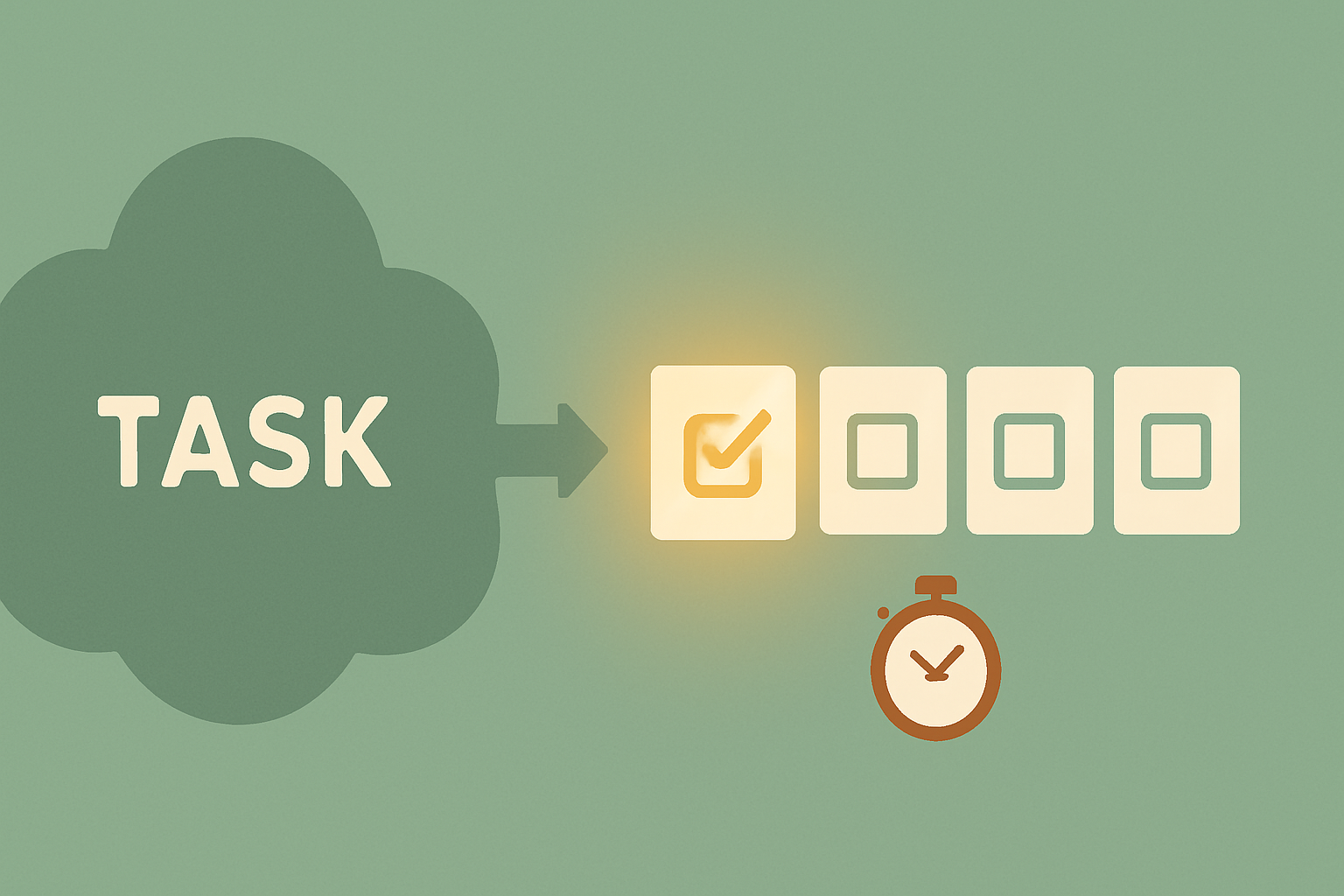
ADHD task paralysis is being unable to start, switch, or finish a task even when you have the intention, the motivation, and sometimes a looming deadline. It is the gap between wanting to act and being able to act, where your brain feels stuck in place, no matter how much you tell yourself to move.
It usually shows up in a few forms. There is the freeze at the start, where you cannot begin. There is choice paralysis, where too many options lock you up, and you do none of them. And there is the mid-task stall, where you stop partway and cannot pick the thread back up. They feel different but share one root: an executive function system that has jammed. Naming it matters because “I am in task paralysis” is a far more accurate and useful thought than “what is wrong with me”.
Why does ADHD cause task paralysis?
Task paralysis happens because the same brain systems that start and steer tasks, your executive functions, are the ones ADHD makes unreliable, and they get overwhelmed easily. Starting a task quietly demands a stack of skills: picturing the outcome, sequencing the steps, holding it in working memory, and generating the initial push to begin. When that stack overloads, the system protects itself by stalling.
A few things commonly trip the overload. One is dopamine: the ADHD brain is reluctant to engage with tasks that do not offer enough interest or reward, so a boring task gets no startup fuel. Another is overwhelm, when a task is vague or huge, and your brain cannot find the first step, so it finds none. A third is emotion, especially perfectionism and fear of getting it wrong, which raises the stakes until starting feels dangerous. According to ADDA, this kind of paralysis is a real and common ADHD experience, not a character flaw. And crucially, stress makes it worse, which is why pressure and self-criticism deepen the freeze instead of breaking it.
How do you break out of task paralysis in the moment?
The fastest way out is to make the very first step so small it barely counts, because paralysis is almost always a starting problem, not a doing problem. Do not try to do the task. Just lower the bar until the entrance is trivially easy, and let momentum do the rest.
Shrink the first action to something absurdly tiny. Not “write the report” but “open the document and type the title”. Not “clean the kitchen” but “put one cup in the sink”. The goal is not to finish; it is to break the freeze, and a body in motion is far easier to keep moving than one at a standstill. Pair it with a short timer, five or ten minutes, with full permission to stop when it goes off. The timer makes starting safe because it has a guaranteed exit, and more often than not, you keep going once the hardest part, the beginning, is behind you.
Add a little dopamine to the front
Because the ADHD brain stalls on tasks with no built-in reward, you can often unstick yourself by attaching something enjoyable to the start. This is exactly what a dopamine menu is for: a ready list of small, pleasant things you can put right at the front of a dreaded task to give your brain a reason to engage.
Put on a favorite playlist before you begin. Make a nice drink to keep at the desk. Work alongside someone, in person or on a quiet video call, so the task is not faced alone. Promise yourself a specific small reward at the timer. If you want a prebuilt set of these, I keep a free dopamine menu you can pull starter ideas from, so you are not trying to invent motivation while already stuck.
Be kind to yourself, and drop the perfectionism
A surprising amount of task paralysis is powered by perfectionism, the quiet belief that if you cannot do it properly, you should not start. The fix is to give yourself explicit permission to do it badly. A rough draft, a messy first pass, a half-cleaned room: all of these beat a perfect version that never begins. Lowering the quality bar for the first attempt is often what unlocks the start.
Self-criticism makes this worse, not better. Stress degrades executive function, and paralysis is already an executive function problem, so piling on guilt literally deepens the freeze. Talk to yourself the way you would talk to a friend who was stuck, then take the tiny step. Compassion here is not soft; it is the practical move that actually restores enough function to begin.
How do you prevent task paralysis?
You cannot eliminate it, but you can make it rarer and shorter by building structure that does the hard thinking before you are stuck. The single most effective habit is breaking tasks down in advance, so that when you sit down, you meet a clear, small first step instead of a vague mountain. A task already split into pieces is a task that is much harder to freeze in front of.
It also helps to externalize your tasks and decisions, so your overloaded brain is not holding everything at once. A written list, a visible plan, a single chosen next action rather than an open field of options. And protect the basics, sleep, food, and movement, because a depleted brain hits paralysis faster. None of this makes you immune, but it lowers how often the freeze gets a grip.
Tools that help with ADHD task paralysis
The tools that help all do one of two things: they shrink the starting step, or they add reward to it. For the reward side, a dopamine menu gives you ready ways to make a dull task more engaging at the moment you are stuck. For the harder freezes, when the block is more emotional than logistical, a coping skills menu gives you a gentler set of options to settle yourself before you try the task again.
If apps suit you better, some are built specifically to externalize tasks, break them down, and add reminders and structure. I keep an honest, current list of the best apps for ADHD, several of which are designed around exactly this kind of task initiation and follow-through.
One honest note to close. Occasional task paralysis is a normal part of ADHD, and these strategies genuinely help with the everyday version of it. But if paralysis is frequent, severe, or coming with persistent low mood, exhaustion, or hopelessness, that is worth taking to a doctor or an ADHD specialist, because it can overlap with depression and anxiety that deserve real support. Task paralysis is a sensitive topic for a lot of people, and if any of this is hitting close to home, it is worth reaching out to someone who can help. Used for the ordinary stuck moments, though, the move is always the same: make the first step tiny, add a little reward, drop the perfectionism, and let momentum take it from there.