

An ai accountability partner is software that checks whether you actually did the thing, not just software that reminds you to do it.
That distinction runs through my own process too, just applied to work instead of habits. I do not trust a single pass to tell me something is actually done. I trust a check that follows up. That same refusal to take a single self-report at face value is baked into the operating system I run everything through.
Here is what the category looks like right now, and why the mechanism behind it matters more than the app it lives in.
What makes something an accountability partner instead of a reminder app
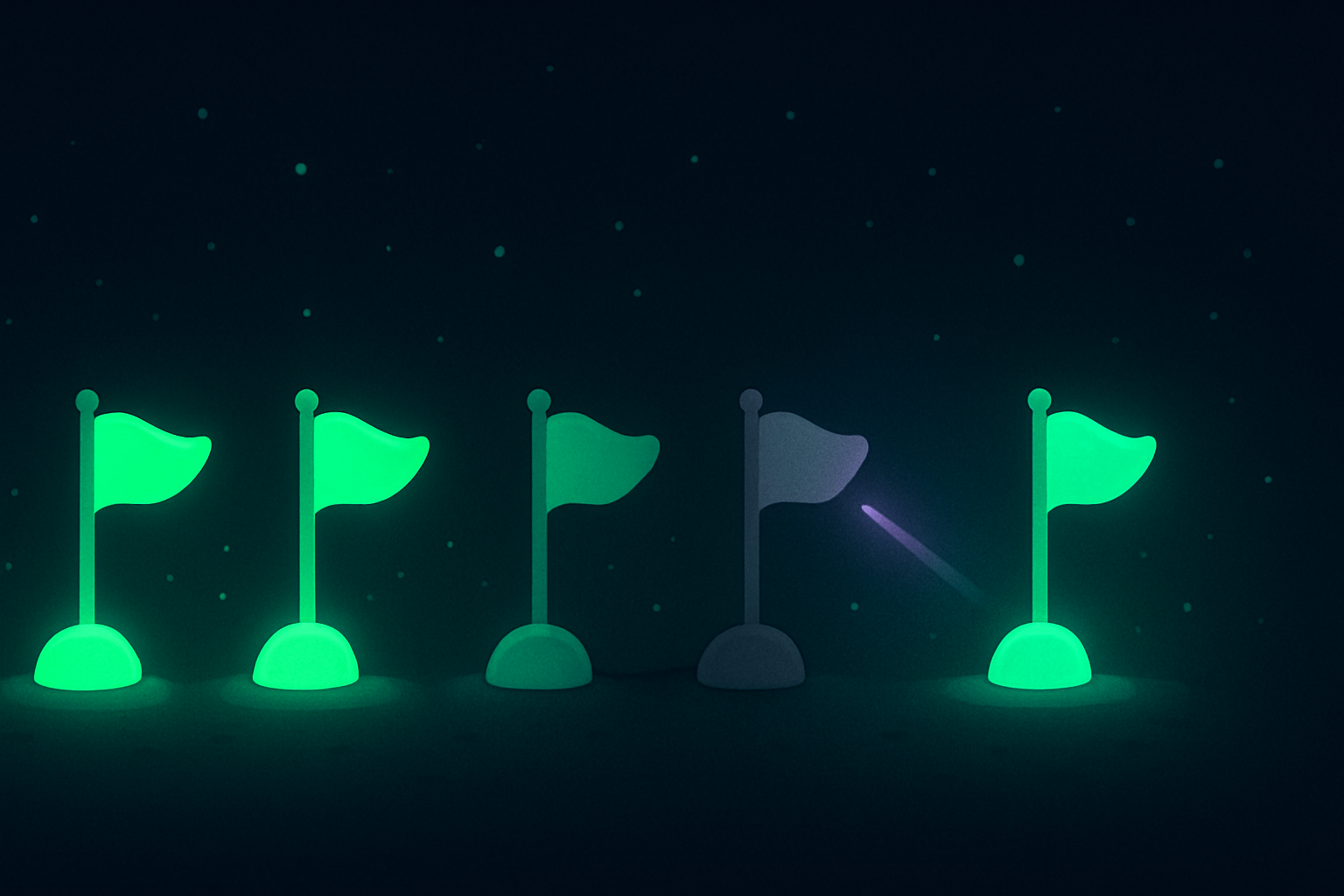
A reminder app tells you once and moves on. An accountability partner follows up, notices when you went quiet, and treats silence as information worth acting on.
That last part is the whole category in one sentence. Silence is not neutral. It is a data point, and most software still treats it like nothing happened at all.
The critical feature across every serious tool in this category is memory. Most AI coaches forget what you committed to the moment the conversation ends. The ones that actually work track your goals over weeks and months, not just within a single chat session.
Without memory, an AI accountability partner is just a chatbot that happens to ask about habits. With it, the system can notice a pattern, three missed check-ins in a row, and change its approach instead of repeating the same cheerful reminder that already failed twice.
This is the same reason a human accountability partner works better than a calendar alert. A friend who remembers you skipped Tuesday and Wednesday brings that up on Thursday. A calendar alert has no idea Tuesday and Wednesday happened at all.
The current tools
Habit Coach AI reaches out proactively with reminders, encouragement, and progress summaries, rather than waiting for you to open the app and report in yourself.
Forfeit takes the enforcement angle further than most. Its Overlord mode can block apps through Screen Time, place a call if you do not wake up on schedule, charge you money if you disable the restrictions, and even text a friend if you miss a stated goal.
Simple’s AI coach Avo does proactive daily check-ins on its paid tier, and added Avo Voice this year, actual phone calls instead of just push notifications.
Be Candid takes the opposite approach on tone, an AI conversation coach built to help you work through what is actually blocking you rather than just tracking whether you hit a number, with everything end-to-end encrypted and no activity logging.
That privacy stance is worth noting on its own. Accountability tools by design know more about your habits and failures than almost any other app on your phone, so how a company handles that data is a real part of the decision, not a footnote.
Nag Bot leans into memory specifically, remembering past conversations and progress so the check-ins reference what actually happened last time instead of starting fresh every session.
Fostera runs its accountability feature on the same underlying architecture as its general coaching product, just reframed around habits and daily check-ins specifically. The shared memory layer is what makes that reframing work at all, rather than being a cosmetic difference between two products.
None of these tools are interchangeable despite sitting in the same category. The enforcement-heavy options and the conversation-first options are solving the same underlying problem with almost opposite mechanisms, which is worth sitting with before picking one.
Why the mechanism matters more than the personality
Every one of these tools picks a different tone, cheerful, blunt, encouraging, clinical. That is mostly branding. The part that actually determines whether it works is the follow-up mechanism underneath it.
A system with real consequences, like Forfeit’s app-blocking or the friend-texting feature, works through accountability that costs something if you skip it. A system built purely on encouragement works through a different lever, making the check-in itself something you do not want to disappoint.
Neither approach is inherently better. What matters is whether the mechanism actually triggers a follow-up, or whether it is just a notification you have already trained yourself to swipe away without reading.
Most people already know which lever works on them. Someone who responds to real stakes usually already knows a purely encouraging app will not move them.
Someone who shuts down under pressure usually already knows a punitive one will backfire. The honest first step is picking based on that, not on which app has the best reviews.
Why this is the purest version of a pattern I already use
An AI accountability partner for a person and an independent review pass for a piece of work are solving the same underlying problem. Something was supposed to happen. A single self-report is not reliable evidence that it actually did.
I run that exact pattern for my own output. I call it Loop Engineering, several independent Claude subagent instances checking the same work, each one blind to what the others conclude, specifically told to find the gap rather than approve what is already there.
The reason that works is the same reason a good accountability partner works. A system checking its own claim tends to agree with the claim, because it is the same reasoning that produced it in the first place.
A separate check, with no stake in the original claim being true, does not carry that bias. That is true whether the “system” is an AI subagent reviewing a pull request or a person deciding for themselves that today’s workout counted.
An accountability partner does for a habit what an independent review pass does for a piece of work, it refuses to just take your word for it.
That refusal is not a criticism of the person or the work. It is a recognition that self-assessment is a biased instrument by default, not a character flaw specific to any one person or any one AI system.
That is also why memory matters so much in both cases. A review pass with no memory of prior verdicts cannot notice a pattern of slipping standards. An accountability check with no memory of prior check-ins cannot notice three missed days becoming a trend instead of a fluke.
Choosing an ai accountability partner
If you respond better to real stakes than encouragement, Forfeit’s consequence-based mechanism is worth the friction of setting hard restrictions on yourself in advance.
If you want something closer to a coach than an enforcer, Simple’s proactive check-ins or Be Candid’s conversation-first approach fit better, especially if judgment and shame are what usually derail you, not lack of reminders.
If you have tried reminder apps already and they did not work, the honest diagnosis is usually that the app forgot as fast as you did. Look specifically for memory across sessions before judging the tone or the interface.
Price is a smaller factor than it looks like upfront. Most of these tools sit in a similar range once you compare a real subscription tier to a real subscription tier, so the mechanism fit matters more than shaving a few dollars off the monthly cost.
The tool matters less than whether the follow-up mechanism actually triggers when you go quiet. A beautifully designed app that never notices you stopped checking in is not an accountability partner, it is a reminder app with better branding.
Test this before committing to a paid plan. Go quiet for three days on purpose during a trial period and see what actually happens. If nothing does, the memory layer is not real, no matter what the marketing page claims about it.
AI accountability partner, quick answers
What is an ai accountability partner? Software that checks in on commitments over time, notices when you go quiet, and follows up, rather than just sending a one-time reminder.
Why does memory matter so much in this category? Without it, the system cannot notice a pattern like repeated missed check-ins, so every interaction starts from zero instead of building on what actually happened before.
Are these apps effective? The mechanism matters more than any single feature. Tools with real follow-up, whether through consequences or consistent check-ins, work better than ones that just send reminders you can dismiss.
Is an AI accountability partner the same as an AI life coach? They overlap heavily. The distinguishing feature of an accountability partner specifically is the follow-up loop, not just advice or encouragement.
What is the closest thing to this in a work context? Independent review, checking a claim of “done” against actual evidence rather than trusting a single self-report, which is the same mechanism behind Loop Engineering.
Where this actually runs
I did not pick this topic as an outside observer. The review process behind everything that ships on softDev23 runs on the exact same principle an ai accountability partner runs on, do not trust a single claim that something is finished.
If you want to see that mechanism in practice, join the Tandri waitlist.