
A second brain ai is not a single product, it is a category of tools that store, connect, and retrieve what you already know so you stop losing it in a pile of unsearched notes.
My own vault runs this way already. Every decision, every draft, every piece of research this site is built on lives in one connected system, and AI is what makes that system actually usable instead of just a bigger pile. That system is the AI operating system I run everything through, and the specific plumbing that lets an AI agent actually read and write to it is Obsidian connected over MCP.
Here is what the category actually looks like right now, and how I think about the AI layer specifically.
What a second brain ai actually is
The core idea predates AI entirely, capturing what you read, think, and decide somewhere durable and connected instead of trusting memory. What changed recently is the retrieval layer.
A second brain app stores, connects, and retrieves your personal knowledge, notes, highlights, PDFs, web clippings, so you can use what you already know without remembering where you saved it.
AI turns that stored pile into something you can actually query. Instead of searching for the exact words you wrote down, you ask a question and the system finds the connected notes that answer it, even across things you wrote months apart.
The main tools right now
Obsidian is local-first, plain markdown files on your own machine, free for personal use with unlimited notes and local storage. Paid sync across devices runs about $4 a month or $48 a year.
Notion fits better when your second brain overlaps with project management, tables, dashboards, and shared pages. It is weaker on fast backlinks and searching cited answers across PDFs specifically.
Mem leads on automatic organization with no manual folder structure, currently priced around $12 a month on its Pro plan.
Reflect feels closer to traditional note-taking software but with AI folded in, currently around $10 a month billed annually, with tasks and calendar integration added recently.
Across all of them, the AI layer does roughly the same job. Automatic tagging, clustering related notes together, and suggesting where something new belongs instead of leaving that decision entirely to you.
The pricing split is worth noticing too. Obsidian charges for sync, not for the AI layer itself, since that comes from plugins you add on top. Mem and Reflect bundle the AI features directly into their monthly price, which is part of why they cost more out of the box.
That tradeoff is really a build-it-yourself versus buy-it-assembled decision, not a quality difference. A local-first vault with plugins takes more setup time upfront and gives you more control over exactly how the AI layer behaves.
Why the AI layer matters more than the storage layer
Storage was never really the hard part. Markdown files, a folder structure, a note-taking app, all of that existed for years before any of this got called a second brain.
The hard part was retrieval. A note you wrote eight months ago is functionally gone the moment you forget the exact words you used to describe it, unless something smarter than exact-match search is doing the finding.
That is the actual shift. A second brain ai does not just store more, it makes everything you already stored findable by meaning instead of by exact phrasing.
How my own vault actually works as a second brain
My vault holds the actual operating instructions for how this business runs, not just notes about it. Content rules, SEO history, decision logs, keyword research, all connected and all queryable by the AI system working inside it.
When I ask about a decision made weeks ago, the system does not need me to remember which file it lives in. It searches by meaning, pulls the relevant note, and treats what is written there as the actual settled decision, not a suggestion to re-derive from scratch.
That last part matters more than it sounds like it should. A system that re-derives old decisions from scratch every time wastes real time and occasionally reverses a call by accident.
One that treats a written decision as settled, unless something new explicitly changes it, behaves the way a good assistant would rather than a search engine with extra steps.
That is the difference between a second brain and a normal folder of notes. A folder holds information. A second brain ai makes that information load-bearing, something the system actually stands on rather than something you have to go dig up yourself.
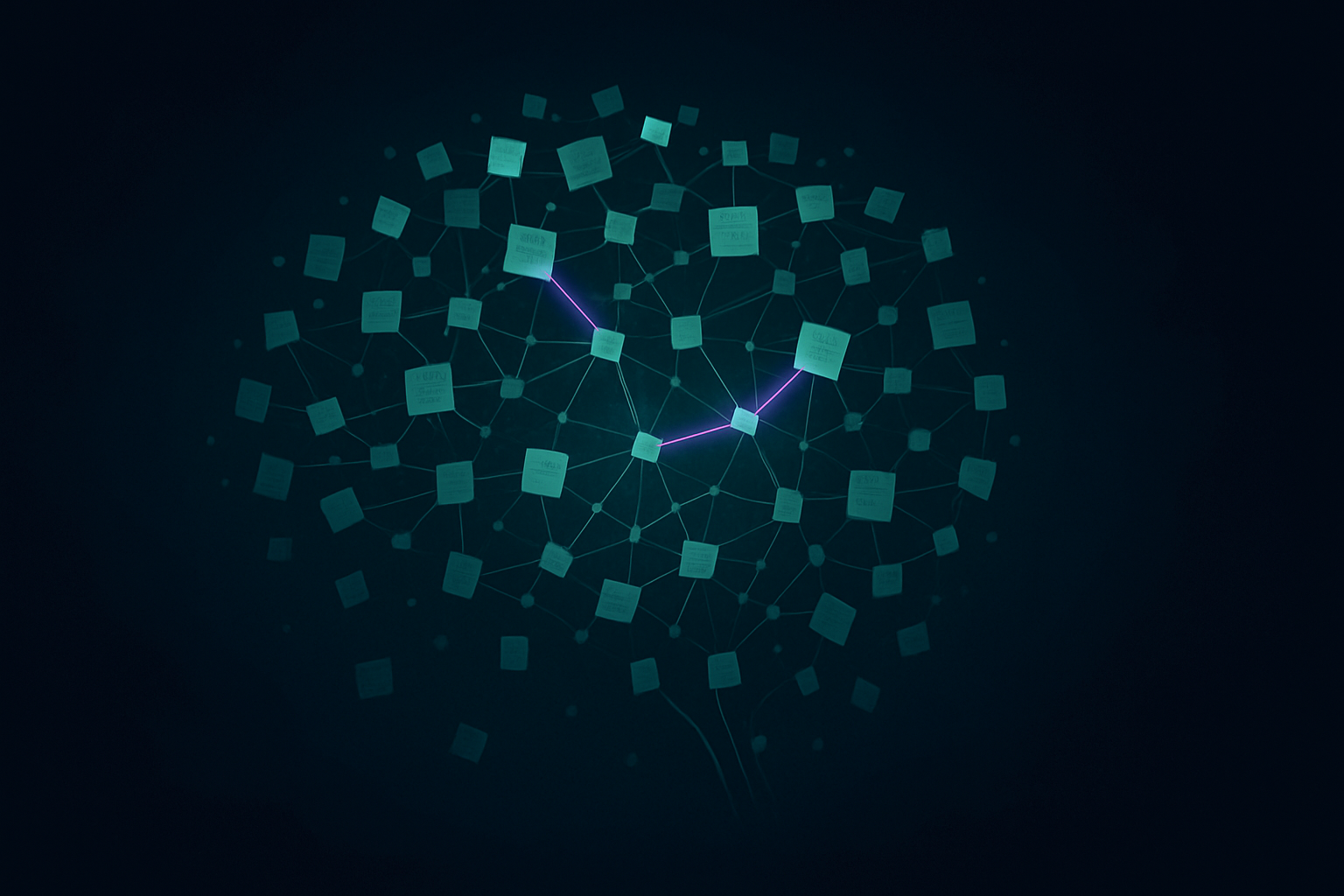
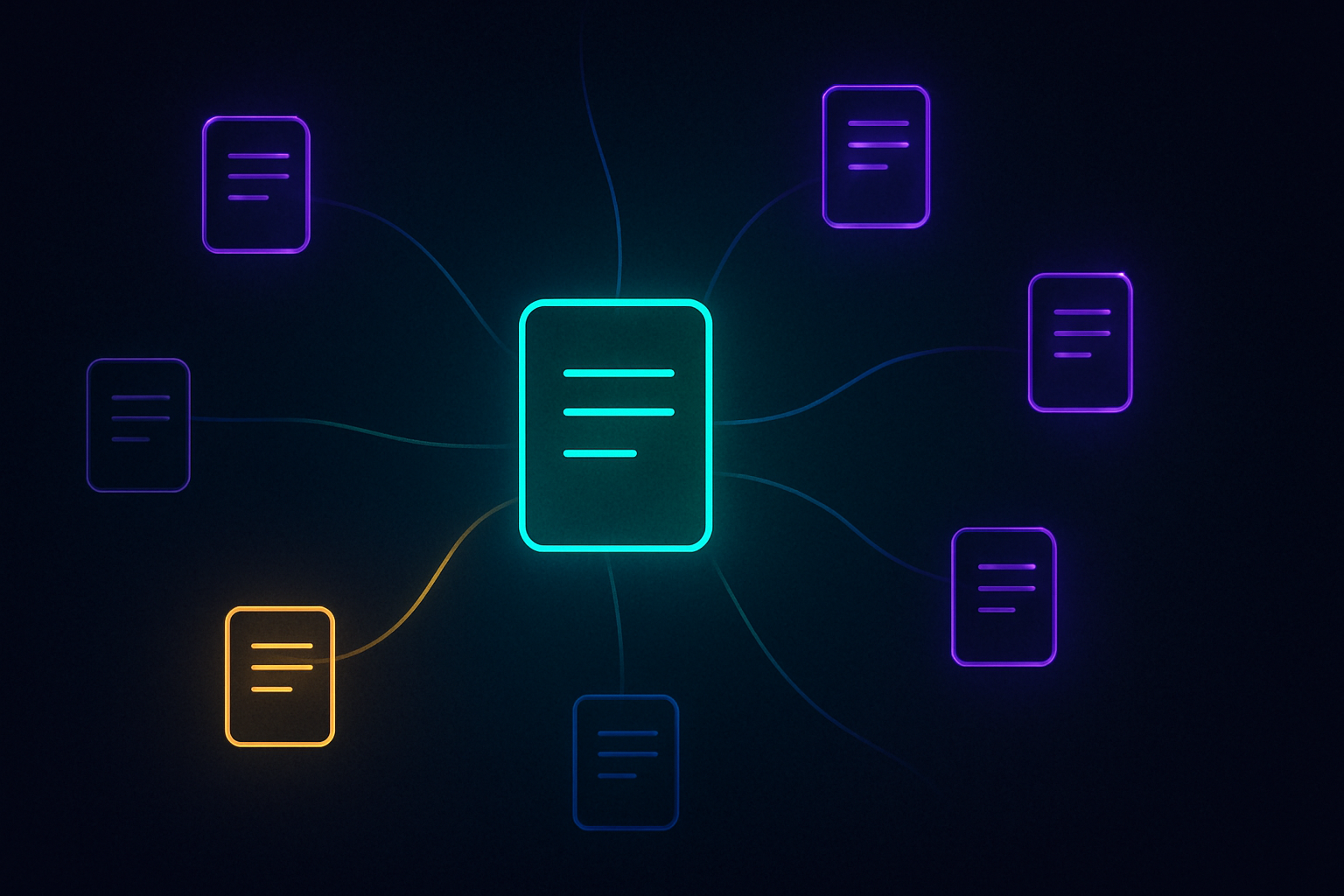
The connected-notes structure also means nothing lives in isolation. A keyword research file links to the post it produced, which links to the roadmap that scheduled it, which links back to the SEO rules that governed how it got written. Pull any one thread and the rest comes with it.
Where the category is still weak
Auto-organization is convenient until it puts something in the wrong place with no clear reasoning behind it, and you spend more time correcting the AI than you would have spent filing it yourself.
Cross-tool retrieval is another real gap. Most of these systems are excellent at finding things within their own walls and much weaker the moment your knowledge lives across a note app, a task app, and a chat history that never sync with each other.
The tools that get closest treat the vault as the single source of truth and let AI operate inside it, rather than trying to be the vault themselves. That distinction matters more than most comparisons give it credit for.
There is also a trust problem underneath the convenience problem. If an AI system silently reorganizes or re-summarizes your own notes, you eventually stop trusting that what it shows you is actually what you wrote.
The best implementations surface what changed and let you approve it, rather than rewriting quietly in the background.
I would rather have a system that asks before it moves something than one that optimizes for looking effortless. A second brain you cannot fully trust stops being a second brain and starts being one more thing you have to double-check. That is the same reasoning behind Loop Engineering, the review process I run before anything real ships.
Choosing a second brain ai for your own use
If you already have a note-taking habit and just want AI-powered retrieval layered on top, Obsidian with AI plugins keeps your files local and portable while adding the query layer.
If you want automatic organization with less manual structure, Mem or Reflect trade some of that portability for convenience, at a real monthly cost.
If your second brain needs to double as project management, Notion is worth the tradeoff on backlink speed for the dashboard and table features you would otherwise build separately.
The honest answer is that the storage format matters less than whether you actually trust the system enough to write things down there instead of just keeping them in your head. A second brain nobody feeds is not a second brain, it is an empty folder with a good name.
Migration cost is worth weighing before you commit to any of them. Plain markdown, the format Obsidian uses, moves cleanly if you ever switch tools later. A proprietary format locks your notes into whichever company built the app, which matters more the longer you plan to keep feeding the system.
Start small either way. Pick one tool, feed it consistently for a month before judging the AI layer, and resist the urge to migrate years of old notes on day one. The retrieval quality improves with volume and connection density, not with a perfectly organized starting point.
Second brain ai, quick answers
What is a second brain ai? Software that stores, connects, and retrieves your personal notes and knowledge, with an AI layer that finds relevant information by meaning instead of exact keyword match.
Is Obsidian an AI second brain? Not natively, but AI plugins add that retrieval layer on top of its local-first markdown storage, which is how I run mine.
Do I need to pay for a second brain app? Not necessarily. Obsidian is free for personal use with local storage; the paid tiers across this category mostly cover cloud sync and hosted AI features.
What is the difference between a second brain and a normal notes app? A second brain connects notes to each other and makes them retrievable by meaning. A normal notes app mostly just stores text you have to search for exactly.
Can a second brain ai make decisions for me? No, and it should not try to. The AI layer surfaces what you already decided or already know. The decision itself still needs to be yours.
Where this actually runs
This is not a category I researched from the outside. My vault is the operating system behind every post, every decision, and every rule this site runs on, with an AI layer that makes all of it actually retrievable instead of just stored.
If you want to see what that looks like in practice, join the Tandri waitlist.