
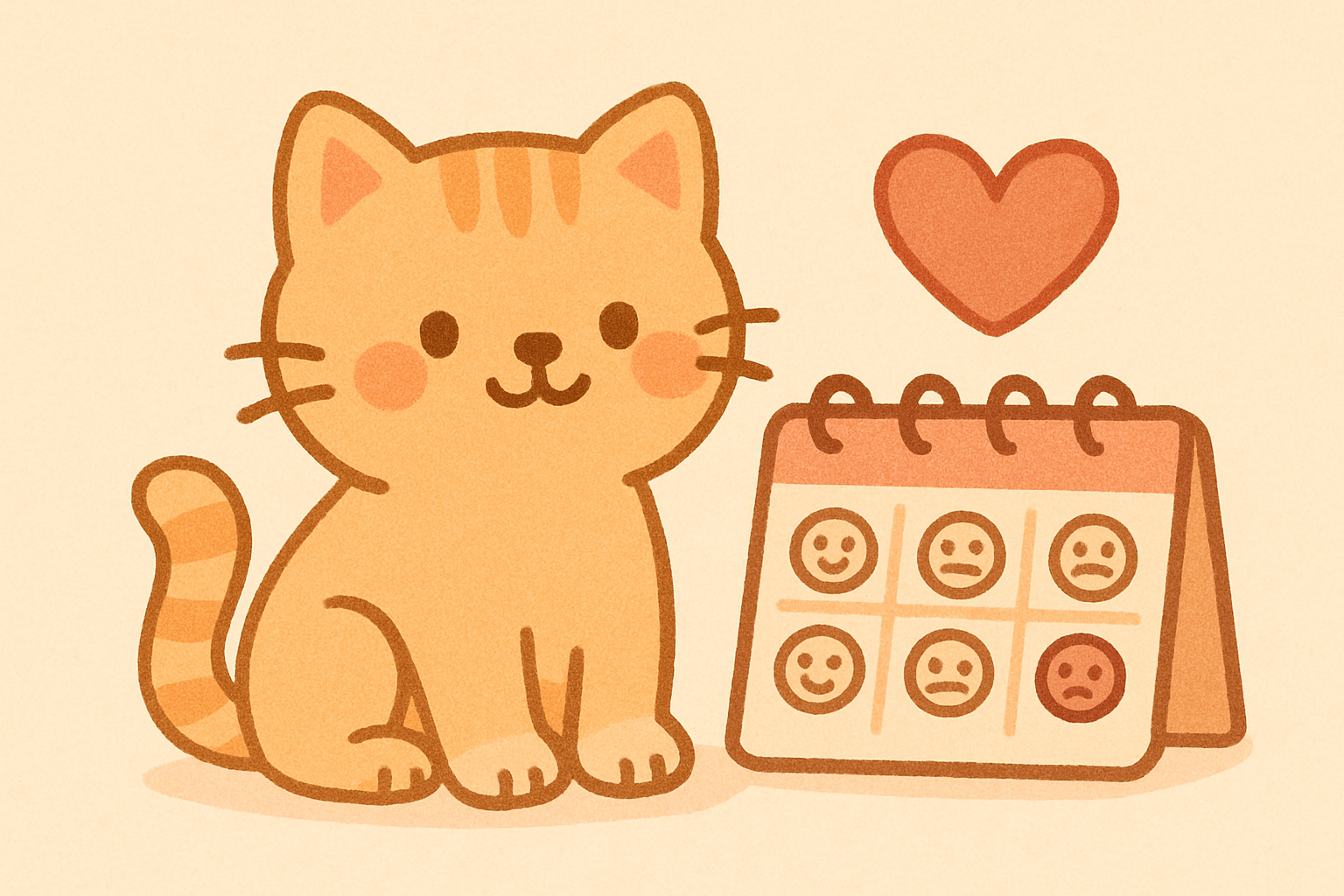

Catzy is a self-care app that pairs a virtual cat with goals, mood tracking, reflection, breathing, focus, and sleep tools. It is built for gentle daily support, not deep project management.
I checked the current App Store and Google Play listings on August 9, 2026. This is a feature-and-fit review, not a claim that I used Catzy for months.
I keep tools like Catzy on the same short list as my dopamine menu. Having a few low-effort options ready is easier than inventing a coping strategy after my energy is already gone.
What Catzy actually does
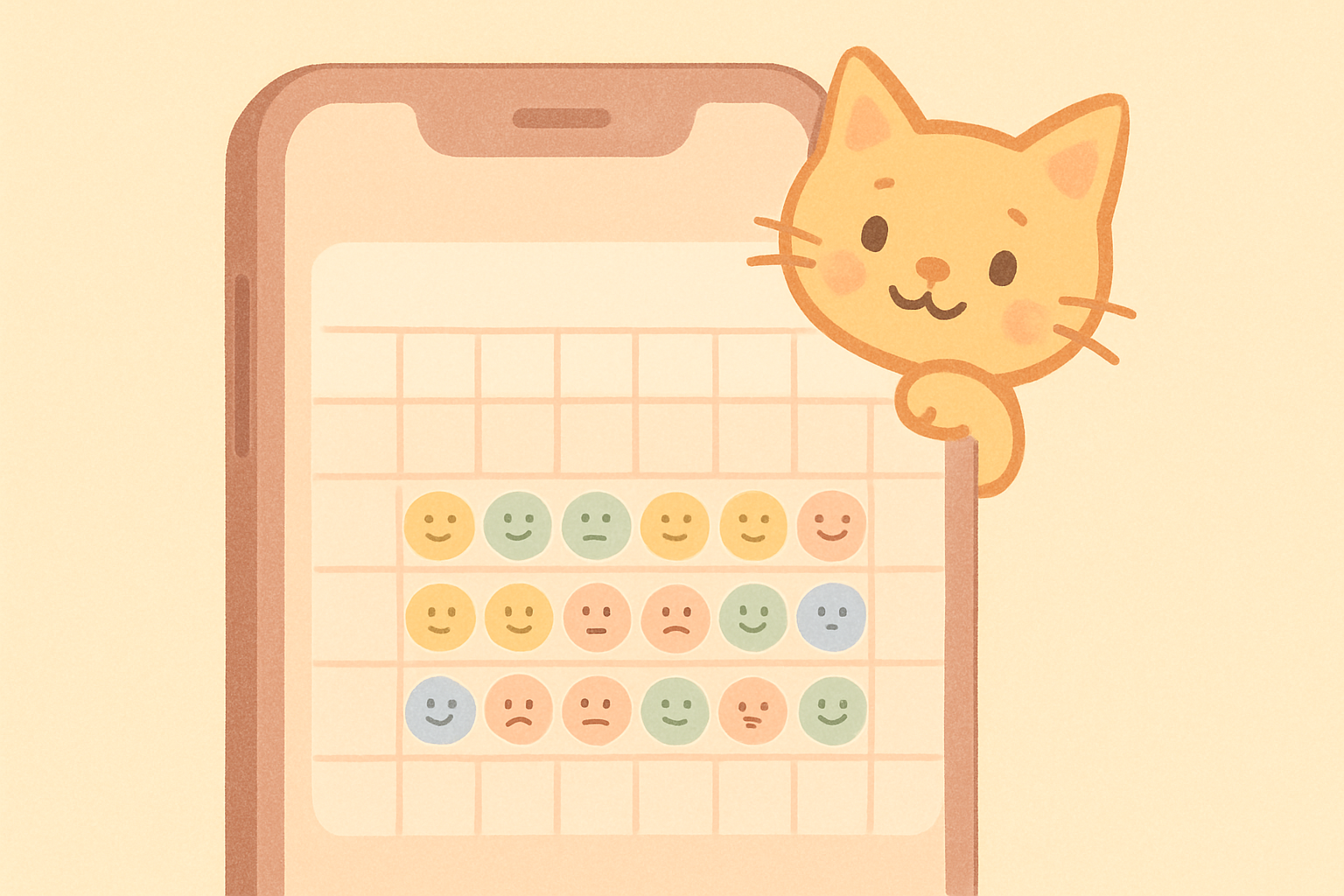
Catzy combines six practical self-care tools around one visible companion. The cat provides the reward layer, while the tools handle the daily work.
- Goals. You can create small routines or start with ready-made self-care goals.
- Emotional reflections. Guided prompts give you a more specific starting point than an empty journal page.
- Mood calendar. Daily entries make it easier to look back for patterns.
- Focus timer. The Android listing says the timer keeps running when you lock the screen or switch apps, with a persistent notification.
- Breathing exercises. Different guided rhythms are available for calming down, focusing, or winding down.
- Sleep helper. Catzy includes white-noise sounds for the end of the day.
The current Google Play listing names all six tools. The App Store listing describes the same core set on iPhone.
Catzy now covers focus and sleep too
The focus timer and sleep helper make Catzy broader than a mood tracker with a pet on top. You can use the same app to begin a task, check in with your mood, take a breathing break, and play white noise before bed.
That range can reduce app switching. It can also make the home screen busier than a single-purpose timer or journal. The useful question is whether you want one gentle toolkit or one very focused tool.
The focus timer is still a timer, not an app blocker or project system. It can hold a work interval, but it does not replace a task manager that tracks projects, dependencies, or a long backlog.
How the virtual cat changes the routine
The cat gives each check-in visible feedback. Goals and reflections are easier to ignore when they only produce a streak number. A companion, room, and collection make the reward easier to see.
That does not guarantee the loop will work for you. Some people return because they care about the pet. Others open the app to decorate and forget the goal that brought them there.
Test the smallest version first. Add one goal, use the mood calendar for a normal week, and see whether the cat helps you return after a missed day. If the reward layer creates more tapping than action, it is the wrong fit.
Catzy vs Finch vs Habitica
Catzy, Finch, and Habitica all add a game layer to real life, but they reward different jobs. My full Finch vs Habitica comparison covers the two larger systems in more detail.
| Job | Catzy | Finch | Habitica |
|---|---|---|---|
| Gentle self-care | Strong fit | Strong fit | Possible, but the reward and damage system adds pressure |
| Mood reflection | Mood calendar and guided reflections | Reflection prompts and self-care goals | Tasks are the main system |
| Visual companion | Virtual cat, room, and collection | Virtual birb, room, and adventures | Avatar, pets, mounts, and gear |
| Task depth | Small goals and routines | Daily goals and self-care areas | Habits, Dailies, To Do’s, due dates, and tags |
| RPG depth | Light collection loop | Light adventure and collection loop | Deep RPG with stats, classes, equipment, and quests |
| Social pressure | Friend features are optional | Friends, good vibes, and shared goals are optional | Parties and quests can make missed Dailies affect the group |
Choose Catzy when mood tracking, focus, sleep sounds, and a cat are the main draw. Choose Finch when you want a broader self-care routine with a mature pet system. Choose Habitica when you want real task depth and a much heavier RPG.
For more options beyond these three, see my list of the best gamified habit trackers.
The honest Catzy limitation
Catzy is not a full project manager. It does not give you Habitica’s separate task types, deep scheduling, party quests, or RPG stats. Its strength is a smaller daily self-care loop.
That narrower scope can be useful when a complex system becomes another project to maintain. It can feel limiting when you need to plan work across several days or keep dozens of recurring tasks organized.
The mood calendar and reflection prompts are also support tools, not medical care. If a pattern needs professional help, a virtual pet should not become a reason to delay it.
Catzy pricing and platforms
Catzy is listed for iPhone and Android. Both stores show a free download with in-app purchases, and the App Store says monthly and yearly subscriptions can unlock premium features.
Prices can vary by platform and region, so I would check the store page on the device you plan to use. The useful free-tier question is whether your daily goal, reflection, and pet loop works before you pay for more content.
How to test Catzy in one week
Start with one goal you already understand. A goal such as taking medication, drinking water, or beginning a ten-minute cleanup gives you a clear result. Do not build a perfect routine on the first screen.
Log your mood once per day at roughly the same time. The calendar becomes more useful when each entry answers the same question instead of capturing random moments.
Use the focus timer for one task that normally invites an app switch. The persistent notification matters only if it helps you return to that task after you lock the phone or open something else.
Try one breathing rhythm and one white-noise track before adding more. A self-care toolkit should reduce choices when you are tired, not give you twenty new settings to manage.
At the end of the week, check three things. Did you open Catzy without forcing yourself, did you complete the goal more often, and did the cat help you restart after a missed day?
If the answer is no, paying for more features probably will not repair the core loop. If the answer is yes, then the premium options may be worth comparing against the limits of the free tier.
Catzy quick answers
Is Catzy only a habit tracker? No. It combines goals with mood reflection, breathing, a focus timer, and a sleep helper.
Does Catzy have a focus timer? Yes. The current Google Play listing says it continues when the screen is locked or another app is open.
Does Catzy have white noise? Yes. Its sleep helper includes curated white-noise sounds.
Is Catzy better than Finch? Catzy is the better fit when the cat, mood calendar, focus timer, and sleep sounds match what you want. Finch has a broader self-care system and a more established birb loop.
Is Catzy like Habitica? Only at a high level. Both reward real actions, but Habitica has deeper task types, RPG stats, gear, parties, and quests.
Is Catzy a good fit for you?
Catzy makes the most sense when you want a gentle companion and several small self-care tools in one place. The virtual cat is the reason to return, while goals, moods, breathing, focus, and sleep tools give each return something useful to do.
Skip it when you need a serious task database, strict blocking, or a deep role-playing system. In those cases, the cute layer may hide that the underlying tool is simpler than your workload.
The best test is a normal week, not a perfect first day. If Catzy helps you restart after your routine slips, the gentle loop is doing its job.