
A coping skills list is most useful when it is sorted, not just long. A wall of a hundred random ideas is overwhelming in exactly the moment you need it, when you are stressed and cannot decide. So instead of one giant pile, here is a coping skills list grouped by what the moment actually needs, so you can match a skill to how you feel rather than scrolling for the right one.
I build small wellbeing tools under softDev23, and the sorting is the part that makes a list usable. Find the group that fits your state right now, pick one or two that sound doable, and you have somewhere to start.
One honest note first. This is a list of healthy, everyday coping skills for ordinary stress, anxiety, and overwhelm. It is not a treatment plan, and if you are struggling badly or in crisis, please reach out to a qualified professional or a local helpline. With that said, here is the list.
What are coping skills?
Coping skills are the things you do to manage stress, difficult emotions, and hard moments in a way that helps rather than harms. The useful ones all share a trait: they leave you steadier afterward, not worse. That is the line between a coping skill and a coping trap, like the doomscroll or the thing you regret, and this list is only the former.
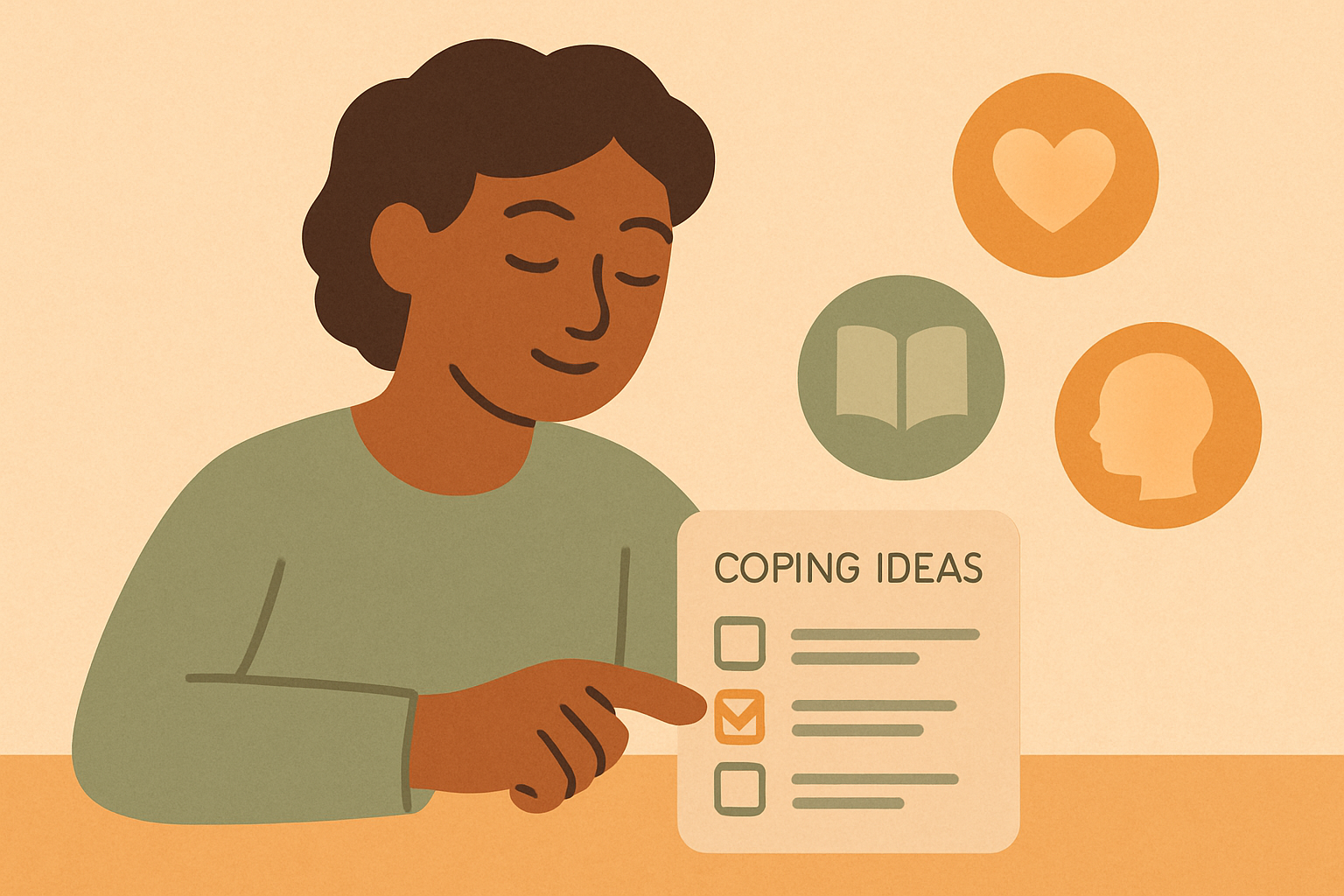
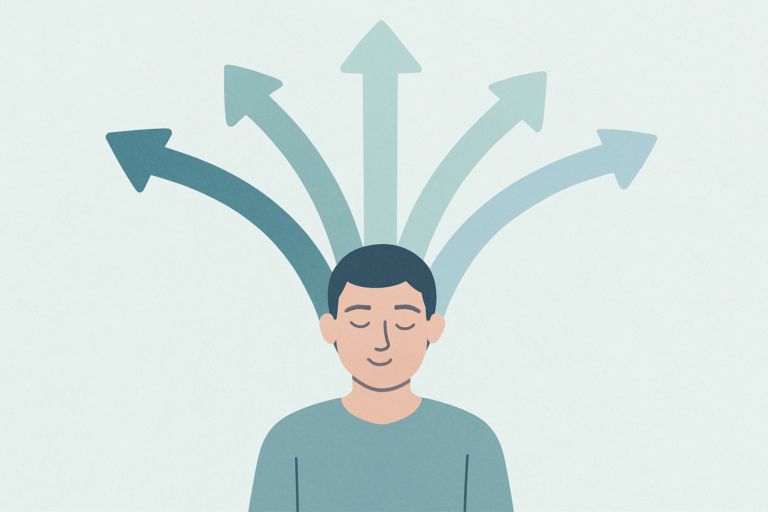
Sorting them by purpose matters because different moments need different things. Panic needs grounding. A flat, drained mood needs something gentler. Pent-up energy needs an outlet. Matching the skill to the need is most of what makes coping actually work, which is why the list below is grouped into five jobs instead of ranked one to a hundred.
Grounding skills, for when you feel panicky or scattered
These pull you out of a spiral and back into the present fast. They are the ones to reach for first when anxiety is spiking.
If anxiety specifically is what keeps pulling you under, I sorted these by symptom in my guide to coping skills for anxiety.
The 5-4-3-2-1 grounding technique, naming five things you see, four you feel, three you hear, two you smell, one you taste. Cold water on your hands or face. Feeling your feet flat on the floor. Holding something with a strong texture and describing it. Naming the date, the place, and what you are doing out loud. Paced breathing, with the out-breath longer than the in-breath. Stepping outside for a moment of fresh air. Pressing your back against a wall and noticing the support.
Soothing skills, for when you need to lower the intensity
These do not solve the problem; they turn the volume down so you can think. Use them when you are activated but not in full panic.
A warm drink held in both hands. A blanket or a comfort object. A calming playlist or familiar background sound. Dimming the lights. A warm shower. Time with a pet. A familiar, low-stakes show you have seen before. A hand on your chest with a few slow breaths. A slow, gentle stretch. Stepping into a quiet room away from noise.
Releasing skills, for when there is energy or emotion that needs out
Sometimes the feeling is not panic but pressure: restlessness, frustration, the urge to do something. These give it a healthy exit.
A brisk walk. Shaking your hands and arms out. Dancing to one loud song. Writing the feeling down in raw, unfiltered words. Scribbling hard or tearing up scrap paper. Tidying or scrubbing one surface with your hands. Pushing against a wall for ten seconds. Letting yourself cry if it is there. Any short burst of exercise.
Connecting skills, for when being alone is making it worse
Isolation amplifies almost everything. You do not have to explain the whole situation; often, just not being alone with it is the help.
A short text to one person. A quick call or voice note. Sitting near someone, even in silence. Posting in a supportive online community. Asking for a hug. Doing one small helpful thing for someone else, which gets you out of your own head. Sharing something light, like a meme, to break the spiral.
Thinking skills, for when your mind is spiraling
When the problem is a thought loop rather than a feeling, it creates a little distance from the thoughts.
Naming the thought: “I am having the thought that…” rather than treating it as fact. Asking whether this will matter in a year. Checking the actual evidence for and against the worry. Postponing the worry to a set time later, so you are not arguing with it now. Writing the worst case, best case, and most likely case side by side. Talking to yourself the way you would talk to a friend in the same spot. Choosing one small next action instead of solving everything at once.
Which coping skills should you start with?
Do not try to use all of these. A list this long is a menu to pick from, not a to-do list to complete. Choose the group that matches how you feel most often, pick two or three skills from it that sound genuinely doable, and practice them on a calm day so they are familiar when you actually need them.
If you are not sure where to start, start with grounding. It is fast, it needs no setup, and it works even in a real crisis, which makes it the most reliable default for almost anyone.
Turn the list into a menu you will actually use
Here is the catch with any coping skills list, including this one. The hard part is not knowing the skills; it is remembering they exist when you are overwhelmed, which is exactly when you can least think clearly. A list you cannot find in the moment helps no one.
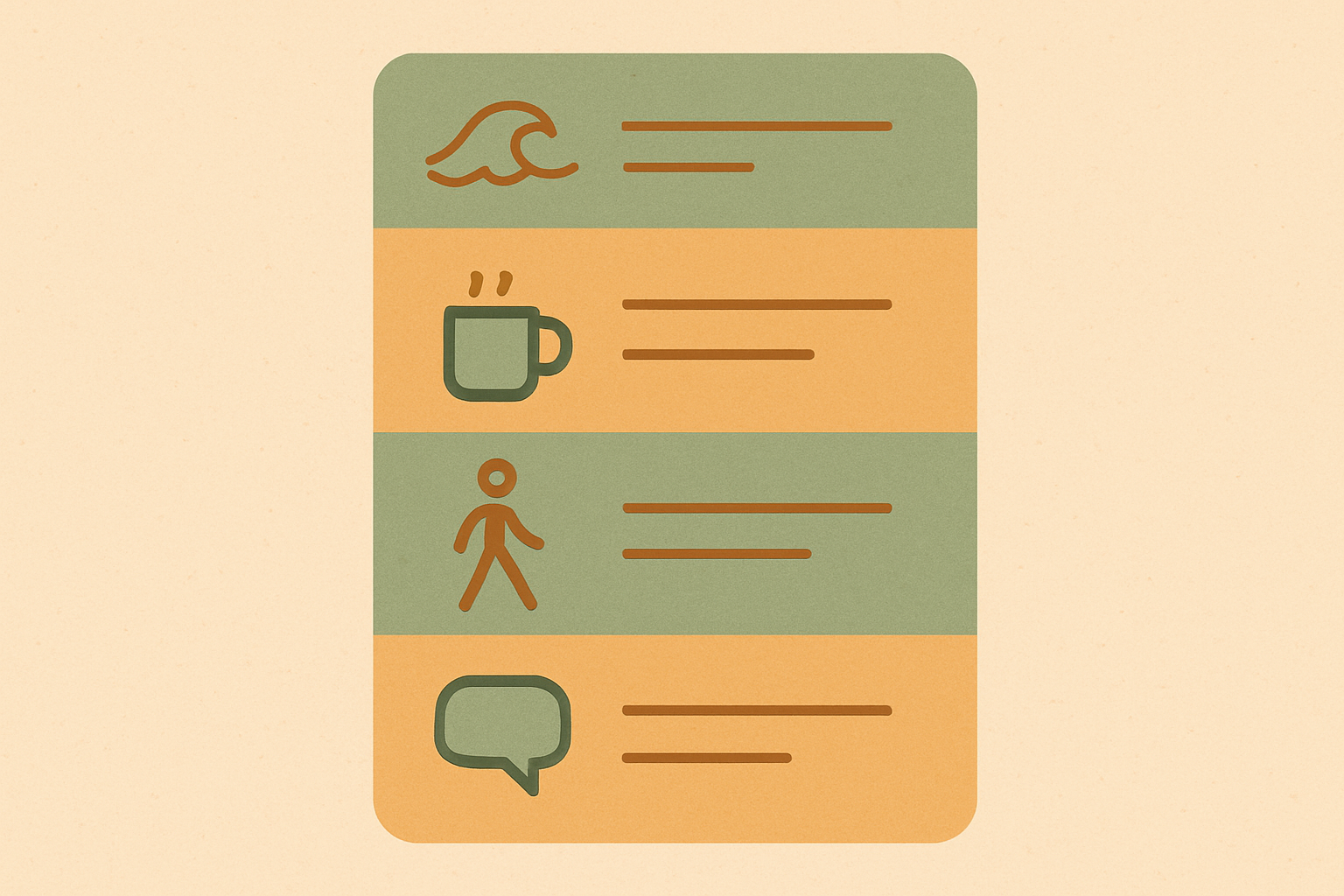
That is why it is worth turning your favorites into a short, personal coping skills menu you keep somewhere you can reach in seconds.
If you want a quick way to make one, I built a free coping skills menu builder that walks you through these groups, suggests options for each, and lets you save or print the result.
It pairs well with a self-care menu for gentler, restorative days and a dopamine menu for when the problem is starting rather than coping.
If you want gentler ideas to draw on, I keep a longer set of self-care menu ideas for the restorative side of that.
If supportive apps would help too, I keep an honest list of the best apps for ADHD, several of which are built around exactly this kind of regulation.
Healthy coping versus the traps
It is worth being honest about the difference between a coping skill and something that just feels like one in the moment. Plenty of things take the edge off now and cost you more later: the endless scroll, the extra drink, the thing you avoid that grows while you ignore it. Those are not on this list on purpose.
A real coping skill is one you are glad you reached for afterward. When you are building your own list, that is the test to use: does this leave me a little steadier, or does it just delay the bill? Keep the steadying ones. There are good, free guides on stress and coping from nonprofits like HelpGuide if you want to go deeper on any of these.
When a coping skills list is not enough
These skills are genuinely useful for everyday stress, anxiety, and the occasional hard moment. They are not a cure, and they will not resolve the underlying causes of ongoing distress on their own.
If anxiety, low mood, or overwhelming moments are frequent, intense, or getting in the way of your life, please treat that as a sign to reach out to a doctor or mental health professional. A coping skills list is something you use alongside real support when you need more than a tool, not instead of it. Used that way, for the ordinary hard days, having a few sorted, trusted options ready is one of the simplest ways to handle a hard moment without it handling you.