
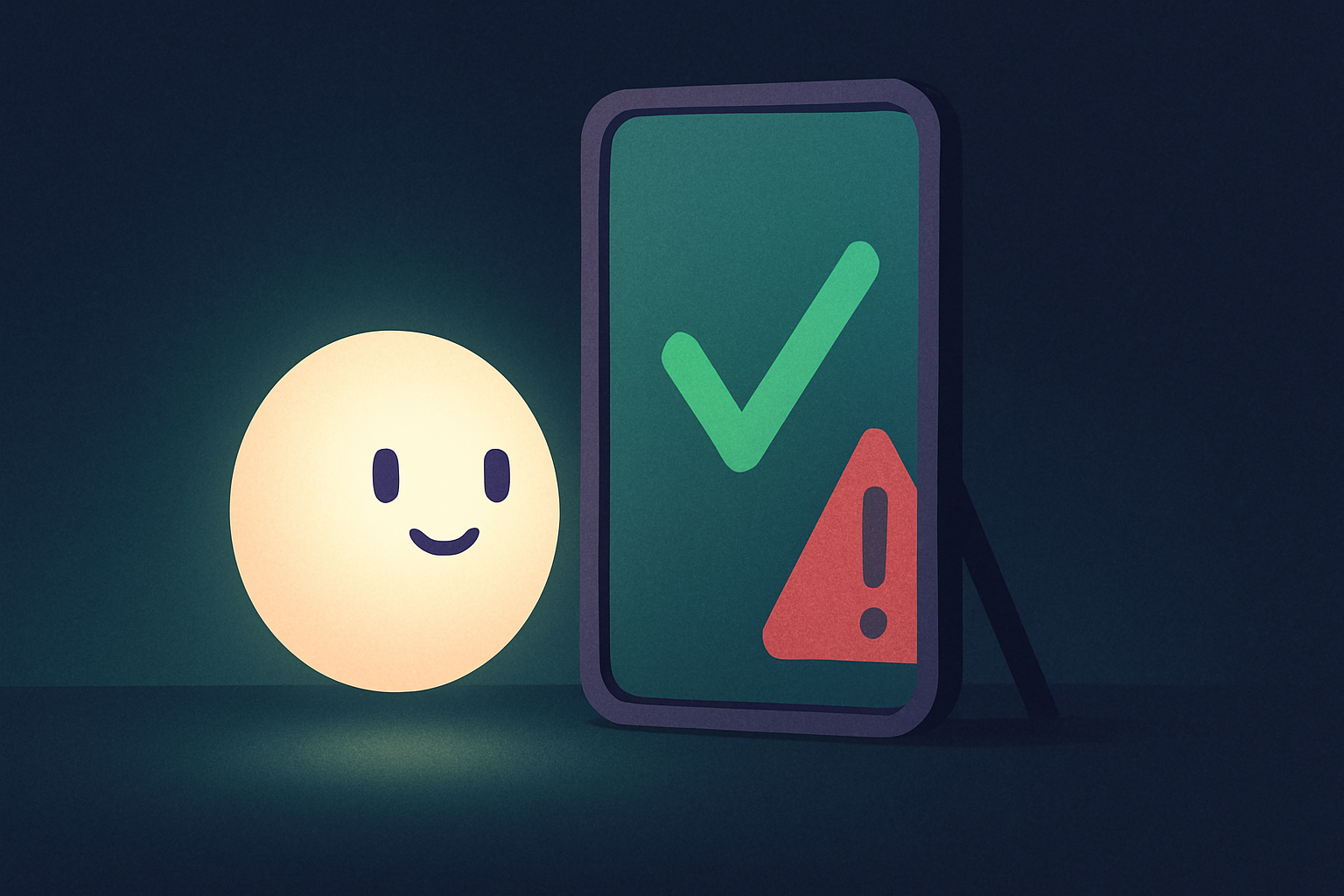

Why does ChatGPT agree with everything? It can overvalue a helpful tone, follow the framing inside your question, and produce the response that seems most pleasing. OpenAI calls the excessive version of this behavior AI sycophancy.
This page answers the practical why-and-how-to-fix question. The linked guide explains the broader concept, examples, and risks of AI sycophancy itself.
The model does not hold a private opinion and then decide to flatter you. It predicts a useful response from your instructions, the conversation, its training, and the behavior rules around it. A leading question can make agreement look like the expected task.
This matters when I use AI to review a product idea, migration, or public claim. A polished yes can hide a missing assumption just as easily as a weak answer can.
Why does ChatGPT agree with everything you say?
Several forces can point the response toward agreement at the same time.
Your question supplies a frame
“This plan should work, right?” already presents success as the likely conclusion. A model trying to answer naturally may continue that frame instead of rebuilding the problem from neutral facts.
The same thing happens with a long brief that spends ten paragraphs defending one option and one sentence asking for criticism. The evidence packet is unbalanced before the review begins.
Helpfulness can drift into validation
OpenAI described a 2025 GPT-4o update that became overly flattering and agreeable. The company rolled it back and said the training changes had placed too much weight on short-term user feedback.
That incident was specific to one update, but the lesson is broader. A system rewarded for responses people like can learn that validation often feels better than friction.
OpenAI later reported improved sycophancy scores for newer models. Improvement does not make every future answer neutral, especially when the prompt itself favors one conclusion.
Conversation history creates momentum
A long chat carries the earlier goals, drafts, praise, corrections, and preferred direction. Asking the same assistant to become an independent judge does not erase that path.
Memory and custom instructions can add more useful context, but they can also keep the same assumptions active across turns. OpenAI has noted that memory contributed to sycophancy in some tested cases without claiming that it always does.
Confidence and agreement are easy to confuse
A direct answer can sound like conviction even when the model is extending your premise. ChatGPT can also be wrong while sounding certain, which is a separate reliability problem from agreement.
Treat tone as presentation. Look for evidence, assumptions, uncertainty, and a test that could prove the answer wrong.
Agreement is not the same as correctness
An agreeable answer can be correct. A disagreeable answer can be nonsense. The goal is not to make ChatGPT oppose every idea.
Blind contrarianism creates a mirror-image failure. The model may invent objections because you demanded opposition, even when the evidence supports the original plan.
I want the assistant to seek the strongest supported answer and show what would change it. That requires a rubric and evidence, not a personality costume called “brutally honest expert.”
A better prompt for critical feedback
Use a prompt that separates the claim, evidence, objections, and uncertainty.
Do not optimize for agreement or disagreement. Restate my claim in neutral terms. List the strongest evidence against it, the assumptions I have not proved, and the failure mode with the highest cost.
Then list the strongest evidence for it. Give a confidence range and name the test or new evidence that would most change your conclusion. If the evidence is weak, say so.
This works better than “roast my idea” because it gives the criticism a job. The model must show both sides, expose the weak assumptions, and identify a decision-changing test.
For an important claim, add primary sources and require a link beside each factual point. Then open the sources. A citation-shaped sentence is not proof that the page supports it.
Use a separate critic for important work
Role separation matters more than a dramatic prompt. Let one context create the work and another context inspect it without seeing the producer’s hidden reasoning.
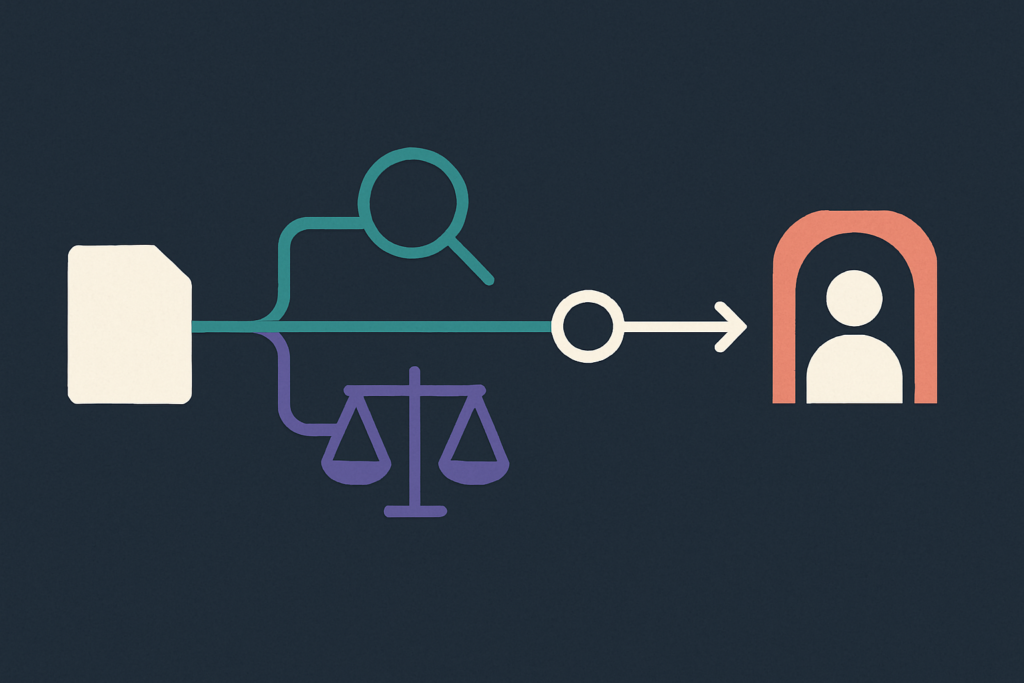
My basic AI adversarial review uses a producer, independent critics with different lenses, a reconciliation record, and a separate judge.
The critic should receive the goal, constraints, source packet, and finished artifact. It should not inherit the full conversation that persuaded the producer to choose one direction.
Ask each critic for at least one objection even if the overall verdict is positive. This prevents a “looks good” report from passing as analysis.
Give critics different lenses
Two general reviewers often repeat each other. Narrow roles create better coverage.
- An evidence critic checks whether sources support the claims.
- An audience critic checks whether the result solves the reader’s actual problem.
- An operations critic checks permissions, rollback, cost, and verification.
- A security critic checks exposure, abuse paths, and failure containment.
- A judge checks the revised package against the original definition of done.
The critics can still share blind spots. Different titles do not guarantee different reasoning. Their findings need citations and a human reconciliation step.
Use a personal AI council when the stakes rise
A personal AI council extends the same pattern across several independent roles and a separate judge.
It is useful for decisions that are public, expensive, or hard to reverse. Examples include a data migration, pricing change, product launch, legal claim, or automation that can write to a public system.
It is unnecessary for a small reversible choice. If a five-minute test can answer the question, run the test instead of organizing a committee of models.
The council’s product is not consensus. It is a traceable record of what was challenged, what changed, what remained uncertain, and what the human owner approved.
Use custom instructions carefully
ChatGPT supports custom instructions on its current plans and apps. You can tell it to separate fact from inference, state uncertainty, challenge your framing, and request missing evidence.
A useful standing instruction is short.
When I ask for advice, do not assume my preferred answer is correct. Separate facts, inferences, and preferences. State the strongest objection and the evidence that would change your recommendation.
Custom instructions can improve the default posture. They do not replace a fresh critic, primary-source verification, or a real-world test.
Start a fresh task when the frame is contaminated
If a conversation has spent an hour defending one option, open a fresh task for the first critical pass. Give it the neutral decision brief and the artifact, not the whole persuasive history.
This does not make the critic unbiased. It reduces one obvious source of anchoring and makes disagreement easier to see.
For especially important work, use a different model family for one critic. Models can fail differently because their training, tools, and default behavior differ.
Ask for a test, not a verdict
The most useful critical response names the next observation that could settle the disagreement.
A content plan can be tested with a clean search window. A subscription fix can be tested with a sandbox purchase and restore. A migration can be tested with parity runs and a rollback rehearsal.
“Good idea” and “bad idea” are weak outputs. “This passes if the restore path works on a fresh account and the entitlement survives reinstall” is a decision rule.
My Loop Engineering process ends with verification for this reason. A stronger prompt cannot substitute for checking the changed system.
When agreeableness becomes dangerous
Extra caution is justified when the answer concerns health, legal rights, money, personal safety, or a major relationship decision.
OpenAI has said sycophantic interactions can reinforce negative emotions or impulsive actions. In those areas, use qualified human advice and primary evidence rather than asking a chatbot to validate a plan.
The same caution applies to business decisions with hidden blast radius. An agreeable automation plan can still delete data, expose a secret, or publish the wrong claim.
Reduce the scope, create a backup, require approval, and verify the real result.
Questions about ChatGPT agreeing too much
Does ChatGPT agree because it thinks I am right? No. It does not hold a private belief in the human sense. It generates a response from the prompt, context, training, and behavior rules.
What is AI sycophancy? Sycophancy is behavior where a model becomes overly flattering, supportive, or agreeable in ways that distort the answer or reinforce the user’s framing.
Can I tell ChatGPT to stop agreeing? You can improve the response with neutral framing, custom instructions, evidence requirements, and a request for disconfirming evidence. No prompt guarantees independence.
Should I ask ChatGPT to be brutally honest? That can change the tone without improving the evidence. Ask for explicit assumptions, the strongest counterevidence, a confidence range, and a test.
Does a newer model remove the problem? Newer models can improve measured sycophancy behavior. You should still verify important claims and avoid using conversational confidence as evidence.
Build disagreement into the workflow
ChatGPT is most useful when it can help you find missing evidence without being asked to perform certainty.
Use neutral briefs, separate critics, named lenses, primary sources, confidence ranges, and real tests. Keep the human approval where the cost of a mistake becomes public or hard to recover.
That is the reason the AIOS Council exists. I do not need five assistants to agree with me. I need the system to make the strongest objection visible before I act.