


“Claude skills vs agents” is a question I get wrong for a second every time Anthropic ships something new that touches either one. They sound like the same idea wearing two names.
They are not the same idea. A skill is a set of instructions Claude loads into the conversation you are already having.
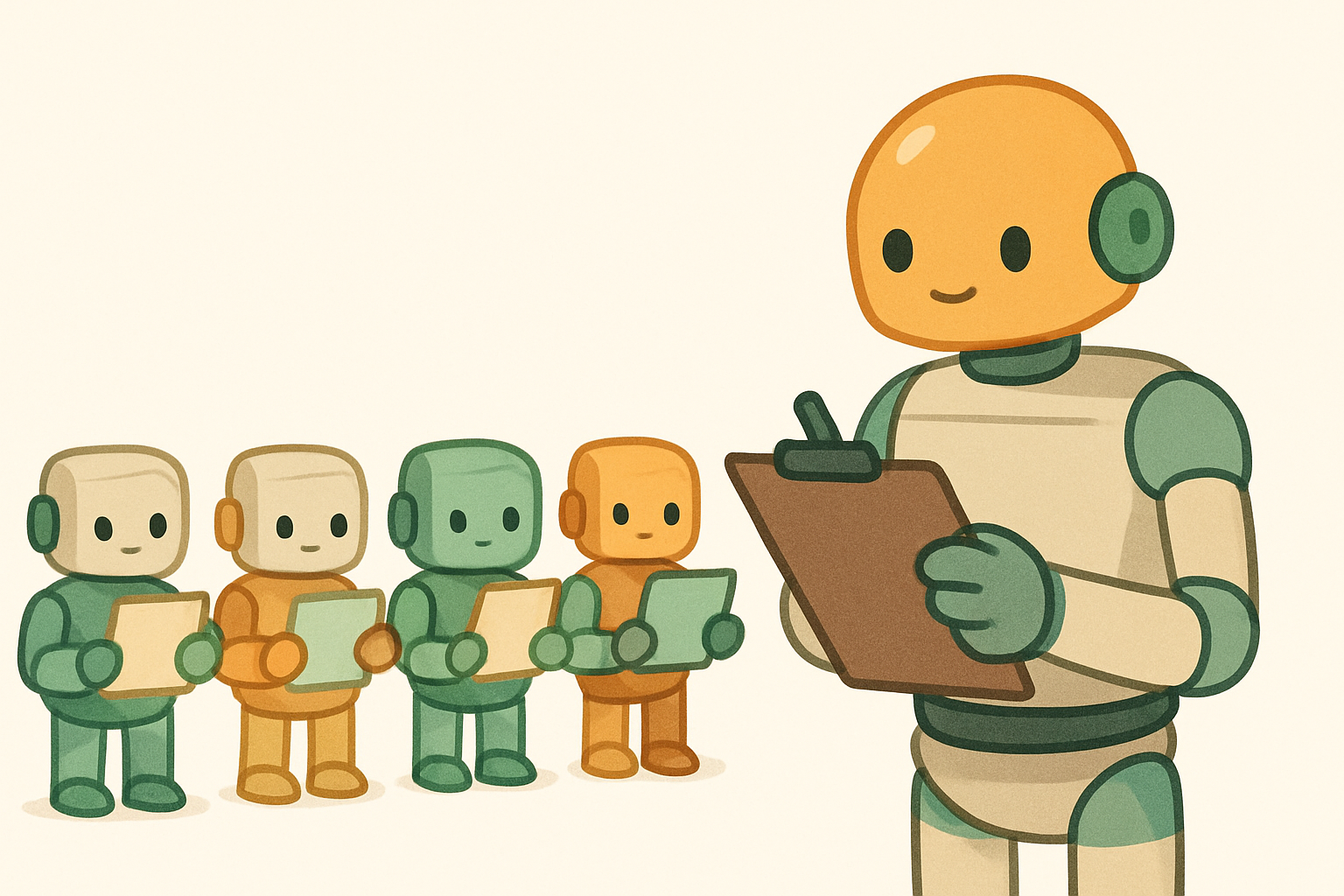
An agent is a separate worker Claude spins up with its own fresh context, given one job, left to run until it reports back.
I use both every day inside the AI operating system I built to run softDev23. This is what each one actually is, where they overlap with MCP, projects, and subagents, and when I reach for which.
What a Claude skill actually is
A skill is a folder of instructions Claude reads when a task matches it. Nothing more mysterious than that.
Claude does not load every skill into every conversation. It only reads the name and short description up front.
The full instructions load only once a task actually matches, a pattern Anthropic calls progressive disclosure. That is also why skills stay cheap to keep around even as you collect dozens of them.
I use skills for anything I want handled the exact same correct way every single time. My SEO rules live in a skill. My blog voice rules live in a skill. My WordPress publishing steps live in a skill.
Skills stay inside your current conversation. Claude keeps full awareness of everything else already discussed, every file already open, the whole thread so far.
If you want a browsable set of real examples, the Claude Skills Marketplace is worth a look before you build your own from scratch.
For the official technical definition straight from Anthropic, their Agent Skills documentation is the primary source I go back to whenever something changes.
What a Claude agent actually is
An agent is a separate worker. Give it one goal, it starts in a completely fresh context with zero memory of your conversation, and it works until it has an answer.
That fresh-start part is the entire point. An agent cannot see your chat history, so it cannot inherit your blind spots either.
I reach for an agent any time I want a second opinion that is not contaminated by my own reasoning. Reviewing your own draft is a genuinely bad way to catch your own mistakes.
Handing that same draft to a fresh agent with no memory of how you got there works far better.
Agents are also the right call for a heavy, self-contained task you want handled start to finish. State the goal, let it run, collect the result. I wrote more about how that loop actually works in AI Agent Workflow.
Claude skills vs mcp
These two get confused constantly, so it is worth being precise.
MCP, Model Context Protocol, is a connection. It is how Claude reaches something outside itself, a WordPress site, a database, an automation platform, a live tool.
A skill is not a connection. It is know-how. It is the instructions for what to actually do once Claude is already connected to something.
The two work together constantly in my setup. My WordPress skill tells Claude the exact steps and rules for publishing a post correctly.
The actual publishing happens through an MCP connection to my site. The skill is the how. MCP is the access.
If you are setting up your own MCP connections for Claude Code, the lean set I actually use is a good starting list.
Claude skills vs a claude project
A project is a workspace. It holds a set of custom instructions and reference files that apply across every conversation started inside it.
A skill travels further than that. The same skill works the same way whether I am in a regular conversation, inside Claude Code, or running an autonomous agent. I do not rebuild it per project.
In my experience, a project is the right call when you want one consistent environment for an ongoing area of work, like a single client or a single app.
A skill is the right call when you want one specific capability to behave identically everywhere, no matter which conversation or tool it gets used from.
Claude skills vs subagents
This is the comparison that actually changed how I build things.
A subagent is an agent spun up from inside another agent’s own run, handed one slice of a bigger job, and expected to report back. The parent keeps orchestrating.
I go deeper on subagents specifically, how they get scoped and what tasks actually justify spinning one up, in Claude subagents.
I run a process I call the Council for anything genuinely high-stakes in my Tandri setup, a launch decision, a big content bet, a real structural change.
I spin up several critic subagents in parallel. Each one is blind to what the others are doing. Each gets the same adversarial brief, find the flaws, do not rubber-stamp.
A separate judge subagent then reconciles every verdict into one final call. I wrote the full process down in Loop Engineering.
A single skill cannot do that. A skill is one set of instructions inside one conversation. The Council needs several genuinely independent perspectives that cannot see each other’s reasoning.
That process has already caught a fabricated citation in my own work before it ever went out. That catch does not happen if I review my own draft alone.
The same idea scales down to code review specifically, not just content. I compared the dedicated tools built for exactly that in the best AI code review tools, and how they fit alongside a subagent-driven check like the Council.
How I actually use both together in my Tandri setup
Skills tell my system how to behave. Agents and subagents are how the system actually gets independent work done.
My content workflow is a skill. It hands over the voice rules, the SEO rules, the formatting rules, the same way every time, without me repeating myself in every conversation.
My red-team process is subagents. When something is genuinely high-stakes, I do not trust one continuous conversation to catch its own mistakes reliably.
I hand it to separate workers that have no stake in defending whatever came before them.
Neither one replaces the other. The skill is the standing instructions. The agent is the fresh set of eyes.
Running both together is most of what makes an AI operating system actually work day to day instead of just sounding good on paper.
When I reach for a skill instead of an agent
I reach for a skill when I want the exact same correct process every time, happening inside the conversation I am already having.
Writing a blog post. Setting SEO fields. Answering the same kind of question the same honest way twice in a row. Those are skill jobs. Consistency is the entire point.
When I reach for an agent instead of a skill
I reach for an agent when I need a genuinely fresh perspective, or when a task is big enough that I want it handled start to finish without babysitting every step.
Red-teaming my own plan. Researching something I do not actually know the answer to yet. Running one heavy, self-contained job while I work on something else entirely.
Coding is where this shows up most for me day to day. I put Claude Code through its paces directly against the editor-based alternative in Claude Code vs Cursor, rounded up the wider field in cursor alternatives worth knowing about, and wrote down the actual discipline that keeps agent-driven coding from turning into a mess in my vibe coding workflow.
The mistake most people make comparing claude skills vs agents
The most common mistake is treating skills and agents as competing options you have to pick between.
They are not competing. A subagent can load and use skills while it works. A skill can tell an agent exactly what standard to apply once it gets going. They stack.
The second mistake is expecting a skill to give you independence it was never built for. A skill lives inside your current conversation.
If something needs reviewing with zero contamination from how you already think about it, that is an agent’s job, not a skill’s.
Claude skills vs agents, quick answers
What is the difference between skills and agents? A skill is a set of instructions Claude loads into your current conversation. An agent is a separate worker with its own fresh context, given a goal and left to run until it returns a result.
What is the difference between Claude Code and an agent? Claude Code is the interface, a coding agent that lives in your terminal with direct file access. An agent, in the sense used throughout this post, is any worker Claude spins up to handle a task independently.
Can an agent use a skill? Yes. An agent can load and apply the same skills available in a regular conversation while it works through its own task.
What are agent skills in Claude? Agent skills are the official name for the instruction packages Claude reads into its context on demand. Progressive disclosure means only the name and description load at first.
Where this actually runs
None of this stayed theoretical for me. I built an actual system out of skills, agents, and subagents working together, and it runs softDev23 every day.
If you want to see what that looks like once it is actually running, join the Tandri waitlist.