
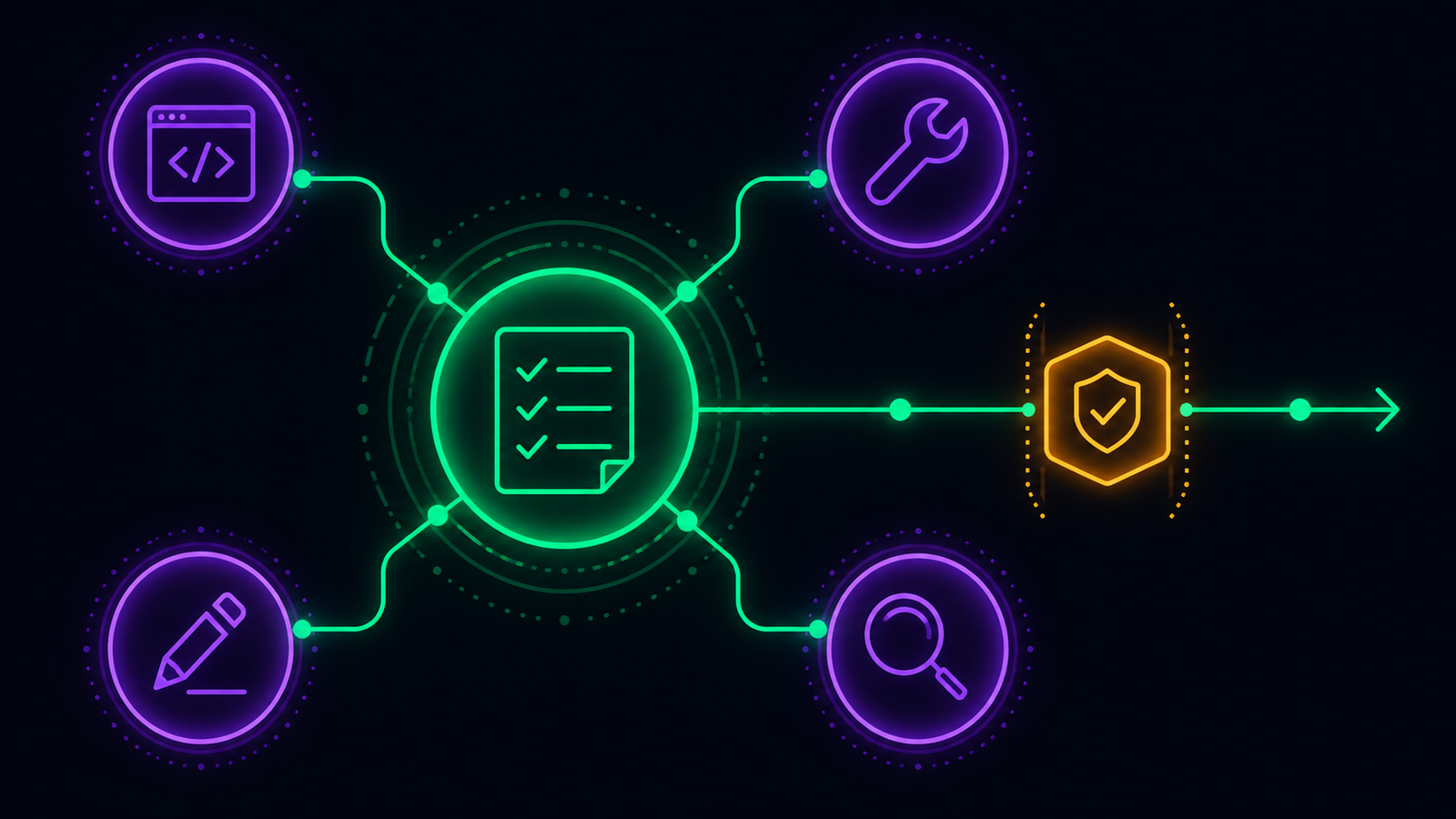

The phrase “agentic operating system” is everywhere in 2026, and almost all of it is written for enterprises. Six-layer infrastructure stacks, autonomous fleets of agents running business processes, orchestration platforms with pricing tiers. It sounds like something you need a procurement department to buy.
I am a solo developer. No team, no procurement department. But I do run an agentic operating system, in the small and practical sense, and it is a real part of how I ship work. So here is the honest version: what the term actually means, what mine looks like, and the part the enterprise posts tend to skip, which is why the guardrails matter more than the autonomy.
What is an agentic operating system?
An agentic operating system is the layer that lets AI agents do work, not just answer questions. It holds the context, the tools, and the rules in one place, so an agent can plan a task, take real actions, see what happened, and keep going, instead of starting from scratch in a fresh chat every time.
The key word is agentic. A normal AI chat responds to you. An agent acts: it edits files, runs a workflow, calls an API, publishes a draft. An agentic operating system is just the structure that makes those actions reliable and repeatable instead of a one-off you can never reproduce.
If a regular operating system manages a computer’s resources and processes, an agentic one manages an AI’s context, tools, and permissions. That is the whole idea, stripped of the enterprise packaging.
How is that different from an AI operating system?
This is where it is easy to get confused, because I have written about an AI operating system before, and they sound like the same thing. They are two halves of one setup.
The AI operating system is the context layer. It is the set of plain files that tell an AI who I am, what I am building, what my rules are, and what voice to use. It is what the AI reads so its output sounds like me instead of generic.
The agentic operating system is the acting layer on top of that context. It is what happens when an agent reads that context and then goes and does something with it: writes the draft, runs the pipeline, updates the post. Context without action is just a well-organized notebook. Action without context is a fast way to ship the wrong thing confidently. You want both.
What are the layers of an agentic operating system?
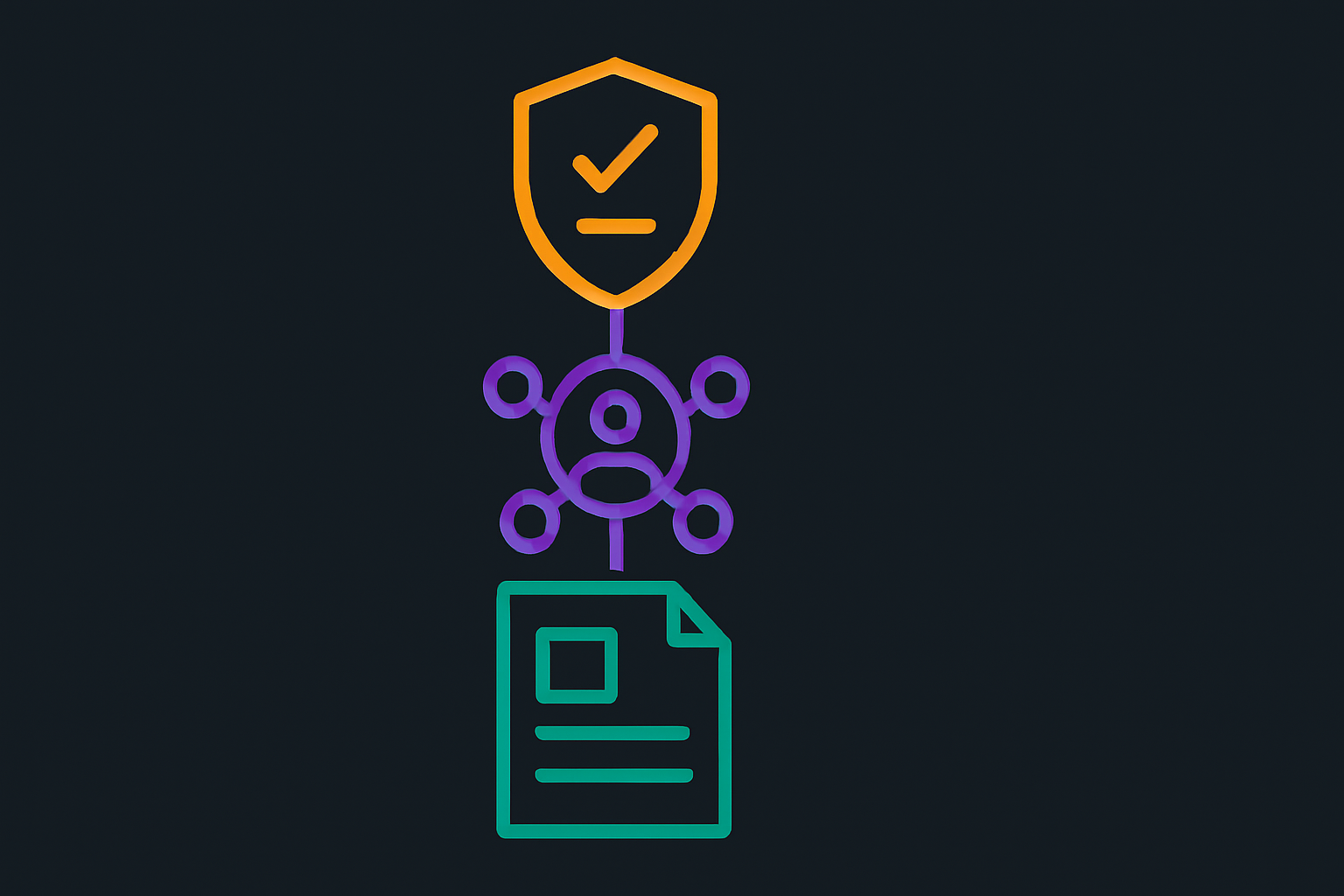
It helps to see the thing as three stacked layers, because that is what stops it from turning into one giant unmanageable prompt.
The bottom layer is context. The plain files that hold who you are, what you are building, your rules, and your voice. Everything above reads from here first, so the whole system shares one set of facts instead of each agent inventing its own.
The middle layer is action. The agents and tools that can actually do things: a coding agent, a writing assistant, an automation tool that runs workflows. This is the layer that turns a decision into a change in the real world, a file written or a draft created.
The top layer is governance. The rules about what an agent may do alone, what needs a human yes, and what is off limits entirely. People treat this as an afterthought, but it is the layer that decides whether you can leave the system running without flinching. Context lets agents understand you, action lets them move, and governance lets you trust the result. Skip any one and the other two get less useful.
What does my agentic operating system actually do?
Mine is not one product. It is a few boring pieces that work from the same context.
The context lives in a plain-text vault, the AI operating system I built in Obsidian. Every agent reads from it first, so they all share the same facts and rules.
To let an agent actually read and write that vault, I connect it with an Obsidian MCP server, which is the wire between Claude and my notes.
The acting happens through a handful of agents and tools. A coding agent helps me write and refactor Swift for my apps. A general assistant drafts content, reviews it, and pushes it where it needs to go. An automation tool, n8n, runs the pipelines that move a finished piece from idea to published post without me copy-pasting through five dashboards.
A concrete example. When I publish a blog post now, an agent reads the draft and the rules from the vault, builds the formatted version, sets the SEO fields, and runs a workflow that creates the post on my site. I review, then it publishes. That is the agentic operating system working: shared context, real actions, a repeatable process, and me in the loop at the one moment that matters.
Why do the guardrails matter more than the autonomy?
Here is the part the hype skips. The goal is not maximum autonomy. The goal is leverage you can trust.
An agent that can act can also act wrong. It can publish the unfinished thing, overwrite the good version, or confidently do exactly what you did not mean. The more capable the agent, the more that matters. So the most important files in my whole setup are not the clever ones. They are the rules that say what an agent may do on its own, what needs my approval, and what it must never do.
I learned this in the most direct way possible. I write everything important out of the chat and into files I control, with git history behind them, specifically because an AI tool once rolled my session back two days and wiped the conversation. The agent was not malicious. It was just fallible, the way all of them are. Durable context and version control turned what could have been a lost two days into a five-minute recovery.
So my agents draft everything and publish almost nothing without a yes. I built approval gates and a dry-run habit into the workflows on purpose: the automation has to tell me what it would do before it touches anything real. Boring, and exactly why I trust it. An agentic operating system without guardrails is not powerful, it is just unpredictable.
Do you actually need one?
If you use AI for the occasional one-off task, no. A structured acting layer is overkill for asking a chatbot to rewrite an email.
But if you are a solo builder using AI agents daily, across coding, content, and busywork, and you keep redoing the same setup or cleaning up the same avoidable mistakes, then yes, it is worth building. Not as a big platform. As a small, honest system.
You do not need ten agents and an orchestration suite. You need three things: a context layer your tools read first, one or two agents that can actually take actions, and a clear rule about what they are allowed to do without asking. That is a working agentic operating system. Everything after that is refinement.
How would you start building one?
If this sounds useful but heavy, the honest path in is much smaller than the word “system” suggests, and it is the order I wish I had followed.
Start with one context file. Not a vault, just a single document that says who you are, what you are working on, and the handful of rules an AI keeps getting wrong. Point every tool at it. That one move fixes most of the generic-output problem on its own.
Then pick one repetitive job you already do by hand and let a single agent take a real action on it, with you approving the result. For me it was publishing a post. The job does not matter; proving that one agent can read your context and do something real does.
Only then add a rule about what it may do without asking. You write that rule the first time the agent does something you did not want, which it will. Context, one action, one guardrail. That is a complete starting system, and it grows from use, not from planning.
The bigger point
The enterprise version of this story is about replacing human steps with autonomous ones. My version is almost the opposite. The point of my agentic operating system is not to remove myself from the work. It is to remove myself from the parts that do not need me, and to stay firmly in the parts that do.
Agents that act are genuinely powerful, and they are only getting more so. But the leverage is only worth having if you keep control of the decisions that matter. Build the context layer so your agents understand you. Build the acting layer so they can move. Then build the guardrails so you can actually trust the whole thing on a bad day. That last part is the one most people skip, and it is the one that makes it work.