
The hardest part of my day is almost never the work itself. It is the starting of the work.
I am a solo developer. Some mornings I sit down, know exactly what I need to do, and just… cannot get the engine to turn over. Not lazy, not unwilling, just stuck in that flat, low-energy place where every option feels like too much effort to choose. If you have an ADHD brain, you probably know the feeling better than I can describe it.
The single most useful thing I have found for those moments is almost embarrassingly simple: a dopamine menu. I keep one, I use it, and it has quietly become part of how I run my day. So here is what it is, why it works, and exactly how to build your own. And if you would rather just make one right now, I built a free dopamine menu builder that creates yours in your browser in a couple of minutes.
What is a dopamine menu?
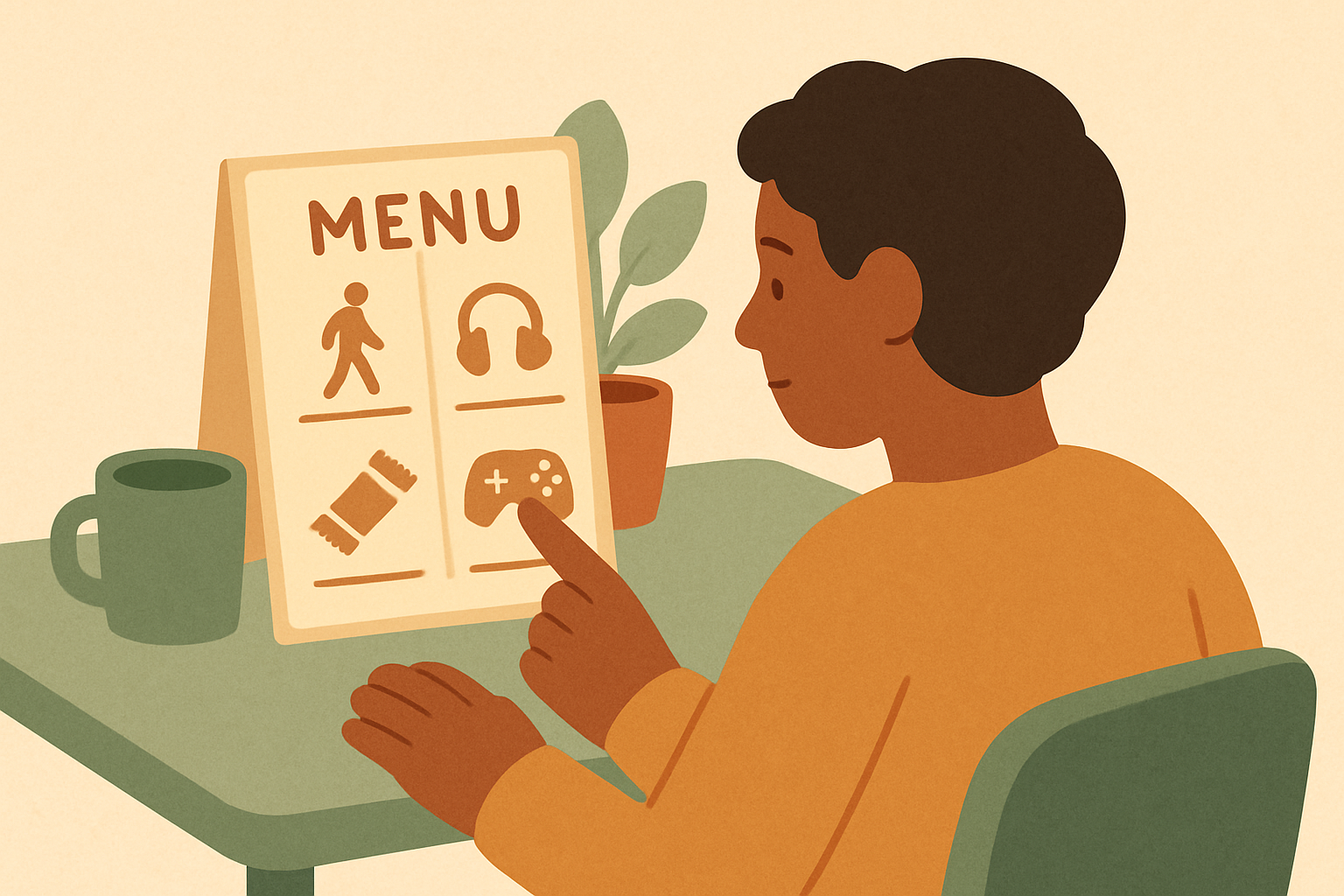
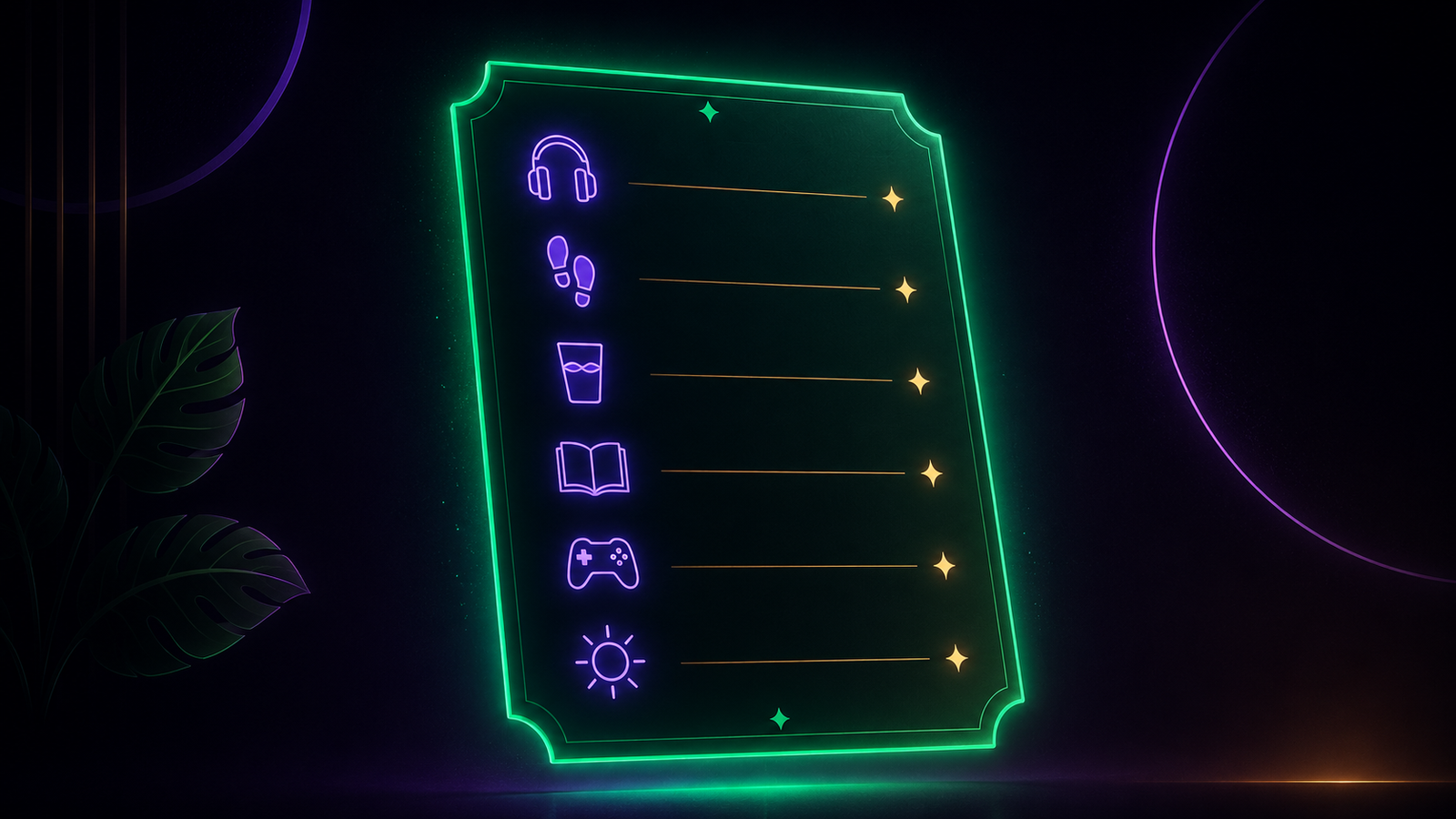
A dopamine menu is a pre-made list of small activities that reliably give your brain a lift, written down ahead of time and organized like a restaurant menu. When you are low and cannot decide what to do, you do not brainstorm from scratch. You just read the menu and pick something.
The idea, sometimes called a “dopamenu,” was popularized by Jessica McCabe of How to ADHD and Eric Tivers. The insight behind it is the part that made it click for me: the moment you most need a healthy hit of dopamine is the exact moment you are least equipped to figure out how to get one. So you do the thinking in advance, while you have the energy, and leave yourself a menu for later.
Why it works for an ADHD brain
Picture the usual sequence when you are running on empty. You have to notice you need a break, generate a list of things that might help, weigh them against each other, work out the steps each one takes, and then actually start. That is a lot of executive function to ask of a brain that is already out of fuel. So most of us default to the easiest, lowest-effort option in reach, which is usually the phone, the feed, the thing that drains us more.
That freeze has a name. I wrote more about it in ADHD task paralysis, the same mechanism that makes starting anything, not just choosing a reward, feel disproportionately hard.
A dopamine menu removes almost all of that load. The deciding is already done. The options are already good ones. All that is left is to pick, which is a small enough ask that you can usually manage it even on a bad day. It is the difference between staring into an empty fridge at 8 pm and opening a menu where someone has already listed what is good.
When the problem is not choosing a reward but the sheer mental clutter, a brain dump clears the noise first so the menu has room to work.
It is not a cure for anything, and I am not a clinician. It is just a small system that makes the good choice the easy choice, which is most of the battle.
How I built mine
I stole the restaurant structure because it works. Five sections, and I filled each with things that actually work for me, not things that sound healthy.
- Starters: tiny, two-minute lifts. A glass of water, a song I like loud, opening the window, and a quick stretch. These are for when I just need to break the freeze.
- Mains: the real resets, fifteen to thirty minutes. A walk without my phone, tidying my desk, a few minutes on an instrument, and making an actual coffee slowly instead of on autopilot.
- Sides: things that make a boring task bearable, done alongside it. Lo-fi or a focus timer running, a drink within reach, a specific playlist that means “we are working now.”
- Desserts: the bigger, genuinely fun rewards I save rather than graze on. A long gaming session, an episode of something, an afternoon on a side project that is pure play.
- Specials: the rare, high-effort, high-payoff stuff for a real reset. A day outdoors, a trip, time with people who refill me.
The categories matter more than they look. Without them, a “fun activities” list quietly turns into “reasons to never start working.” Splitting starters from desserts keeps the two-minute pick-me-ups separate from the two-hour ones, so reaching for the menu does not become its own way of avoiding the day.
How to make your own
You can build a usable version in about ten minutes.
- Brainstorm freely. Write down everything that reliably makes you feel a little better, without judging it.
- Cut the ones with a hangover. Be honest about which “treats” leave you worse off after: the doomscroll, the third coffee, the thing that triggers regret. Those are not on the menu.
- Sort what is left into the five sections: starters, mains, sides, desserts, and specials.
- Put time estimates next to them. “Walk, 20 min” is far easier to choose than “walk.”
- Make it visible. A note on the wall, a pinned file, a card on your desk. A menu you cannot find when you are low is not a menu.
That is the whole thing. You are not building a system, you are leaving instructions for the version of you who has none left.
A few rules that keep it useful
A couple of things I learned the hard way. Keep the starters genuinely tiny, because the entire point is to be doable when nothing feels doable. Refresh it every so often, because what gives you dopamine drifts over time, and a stale menu stops working. And do not aim for an aesthetic masterpiece. Mine is an ugly plain-text list, and the ugliness is part of why I actually keep it updated.
The bigger point
I build focus and habit tools for a living, things like Mana, a focus app, Habitual, a habit tracker built around a journey instead of a guilt-trip, and Catzy. And the longer I do it, the more convinced I am that the tools that actually help are the boring, low-friction ones that meet you on your worst day, not your best.
A dopamine menu is exactly that kind of tool. It does not demand discipline you do not have in the moment. It just makes starting a little easier, and on the days when starting is the whole problem, that is enough. If you want the deeper version of the concept, ADDitude’s dopamine menu explainer is a good place to start.
If you want to go deeper on the tools side, I have written about why standard habit trackers fail, rounded up the best gamified habit trackers, and sorted the best apps for ADHD by the problem they solve.
If you want more raw material for your own menu, I also put together a big list of dopamine menu ideas sorted by section, so you are not staring at a blank page.
And if the hardest part of your day is the very start of it, the same thinking shows up in my ADHD morning routine, where the trick is a little built-in dopamine early on.
If you try one, keep it ugly, keep it visible, and let the starters be small. That is the part that makes it work.